
Postponement of UK Grid Upgrades: Opportunities for the Energy Storage Industry
Examining the energy bills of British households this year reveals an inexplicable “unnecessary expense”: when the grid is unable to transmit wind power, operators are forced to pay to shut down wind turbines and then rely on gas-fired power plants to compensate; these costs are ultimately passed on to countless households. The National Audit Office has termed these expenditures “mandatory costs,” and they now amount to nearly £2 billion annually. The root cause lies in an aging power grid that has not undergone major overhauls for decades.
I. An “Aging” Power Grid Meets the Era of New Energy
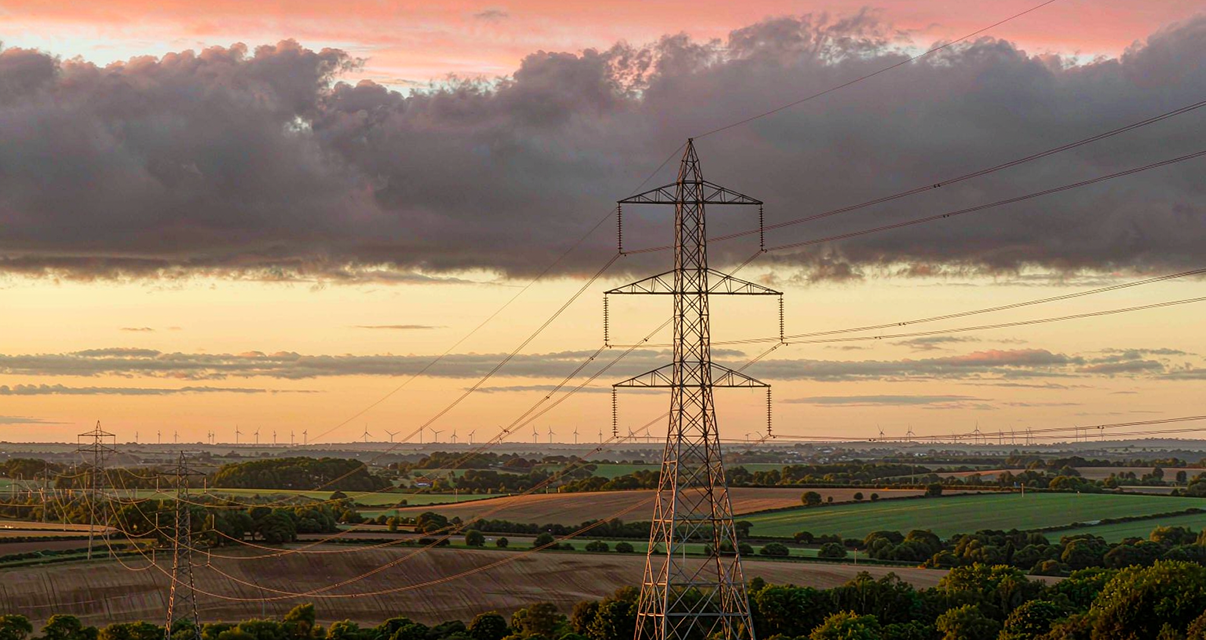
The UK power grid is one of the oldest in the world and has not undergone any major upgrades since the 1960s. While installed capacities of wind and solar power have grown rapidly, its transmission infrastructure remains largely unchanged—clean electricity can be generated, but it faces bottlenecks in delivery. According to estimates by the National Audit Office, if grid upgrades continue to be neglected, the associated costs could rise to nearly £8 billion by 2030. The issue is not a shortage of clean electricity, but rather its inability to be transmitted—a concrete obstacle to achieving the UK’s clean electricity target for 2030.
II. Only 12 of 88 projects were completed: The Cost Behind the Delays
Since 2023, the UK’s National Grid has been advancing its “Super Grid Upgrade” initiative: by 2030, the infrastructure to be built will be five times larger than that constructed over the past three decades. However, the National Audit Office has dealt a blow—of the first batch of 88 projects, only 12 have been completed; among the 56 projects deemed “essential” for achieving clean electricity targets, 50 are expected to face delivery delays. Issues such as land tenure, equipment costs, planning permits, and legal challenges are all slowing progress. According to the projected targets, transmission infrastructure investment between 2025 and 2031 will need to quadruple to approximately £70 billion, with the bulk of this cost still being passed on to households via electricity bills: average households currently pay £44 per year for grid services, a figure that could rise to £104 over the next five years.
III. The power grid cannot afford this; energy storage can
Grid modernization is a “slow variable,” whereas energy storage is a “fast variable.” The value of energy storage lies in storing green electricity that can be generated but cannot be transmitted further, and then utilizing it locally—whether for industrial and commercial applications, where batteries charge during off-peak hours and discharge during peak periods to save substantial costs, or for residential use, providing households with greater resilience in the face of electricity price fluctuations and power outages.
Taking the integrated solution showcased on the moPower official website (https://mopower360.com/) as an example: the residential all-in-one system integrates a hybrid inverter with a lithium iron phosphate battery, supporting dual-channel MPPT photovoltaic input and millisecond-level UPS switching; the commercial and industrial all-in-one cabinet offers a range of capacities from 215 kWh to 520 kWh, features off-grid switching in under 10 milliseconds, and combines IP65 protection with an intelligent BMS to ensure cell safety. By storing green electricity during the day and using it at night, the energy transition is seamlessly integrated into the daily lives of ordinary people.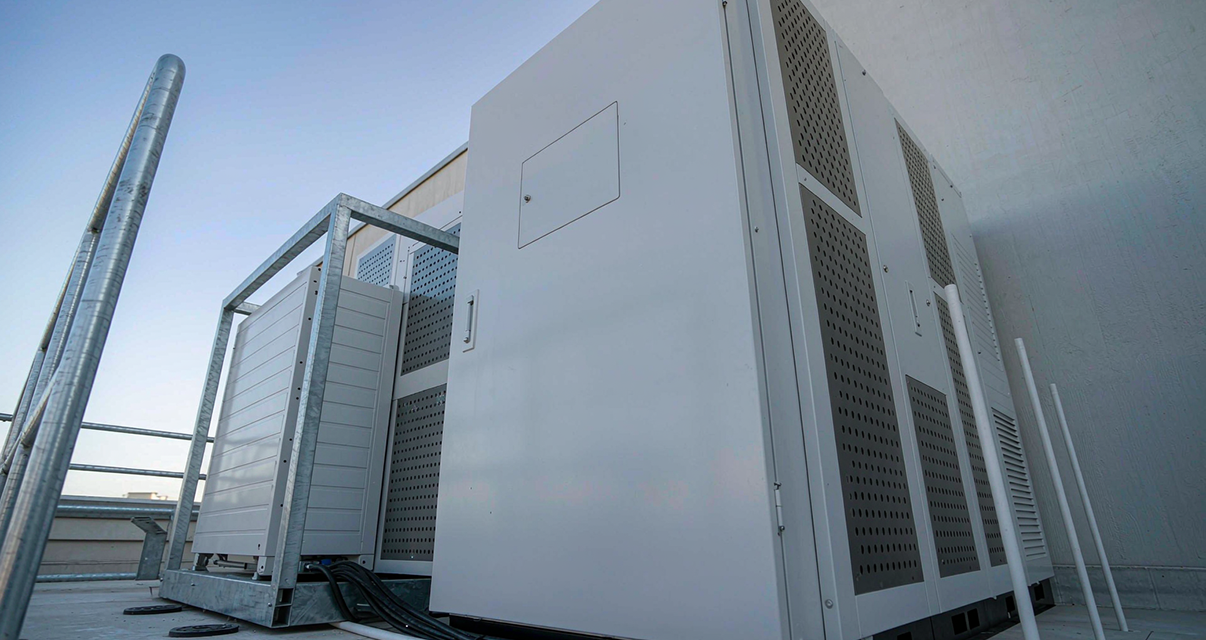
IV.Concluding Remarks
The predicament faced by the United Kingdom is far from unique. When grid infrastructure development cannot keep pace with the growth of renewable energy, the “storage” component within the “generation-grid-load-storage” framework becomes the most flexible piece of the system puzzle. For Chinese energy storage enterprises, this presents not only an opportunity window for global expansion but also a test of their product competitiveness—safety, intelligence, and reliability offer solutions that consistently resonate with customers more effectively than mere narratives.
Frequently Asked Questions (FAQ)
Q1: What are “binding charges” in the United Kingdom? Why do consumers have to pay for them?
When the power grid is unable to deliver sufficient clean electricity to a given destination, operators pay “curtailment fees” to wind farms and simultaneously require gas-fired power plants to increase their output to fill the shortfall; these two costs are ultimately passed on to household and commercial consumers via their utility bills. According to calculations by the UK National Audit Office, these costs currently amount to nearly £2 billion per year; if grid upgrades are inadequate, this figure could approach £8 billion by 2030.
Q2: Why has the UK’s “Super Grid Upgrade” project been repeatedly delayed?
The project faces four primary challenges: negotiations over land title rights, rising equipment costs, protracted planning permit processes, and frequent legal challenges. Of the first batch of 88 projects, only 12 have been completed; among 56 key projects, 50 are expected to face delivery delays—22 of which will be delayed by less than one year, while the remaining projects are experiencing even greater delays in progress.
Q3: Given the slow pace of power grid upgrades, what specific challenges can energy storage systems address?
Energy storage functions like adding a “reservoir” to a power system: it enables the local storage and nearby consumption of surplus green electricity, flattens load curves, provides backup power as a safety net, and reduces reliance on transmission channels. For industrial and commercial users, it also allows them to lower capacity charges and peak electricity tariff costs by shifting their electricity consumption off-peak, thereby shortening their payback period.
Q4: When selecting an energy storage system for an enterprise, which key metrics should be prioritized?
First, assess the safety of the battery cells and the overall system—e.g., using lithium iron phosphate (LFP) battery cells paired with an intelligent BMS; second, evaluate the in-grid and off-grid switching speed—e.g., below 10 ms—to ensure uninterrupted power supply for critical loads; third, consider system efficiency and protection rating (e.g., IP65); fourth, evaluate the flexibility of capacity expansion and parallel connection capabilities. moPower offers a comprehensive product line—including residential all-in-one units, commercial and industrial all-in-one cabinets, and rack-mounted batteries—allowing for customized configurations tailored to residential, industrial park, or factory scenarios.