Australian Household Savings Subsidy Policy – Our Products Meet the Requirements

Australia has been progressively increasing subsidies for residential and commercial energy storage systems in recent years. Following the launch of the “Home Battery Price Reduction Program” in July 2025, additional subsidies totaling A$7.2 billion were introduced in December 2025, establishing a comprehensive and robust policy support framework that has injected strong momentum into the energy storage market. In conjunction with the new policy set to take effect in May 2026, analyzing the core policies and market impacts further highlights the regulatory compliance advantages and compatibility value of our company’s industrial and commercial energy storage products.
Australia’s latest household energy storage subsidy policy features clear objectives that balance incentives with regulatory compliance. The core adjustment to the STC certificate mechanism under the new policy introduces tiered subsidies effective May 2026:100% subsidies for energy storage capacities below 14kWh, 60% for 14-28kWh, and 15% for 28-50kWh, with no subsidies beyond 50kWh. The STC coefficient decreases semi-annually to encourage rational capacity allocation. The policy also mandates that energy storage products must meet CEC certification requirements, pass RCM certification, comply with AS/NZS 62133 safety standards for lithium batteries, and be installed in conjunction with photovoltaic systems, establishing clear market entry criteria.
Policies are directly driving the expansion of the energy storage market, with growing demand from both residential and commercial sectors. Increased subsidies have triggered explosive growth in Australia’s household energy storage market, with total installed capacity exceeding 6.3GWh as of February 2026. As an extension of residential storage, industrial and commercial energy storage systems have benefited from policy-driven clean energy transition initiatives, experiencing parallel demand growth. In the short term, anticipated subsidy phase-outs prior to new policy implementation have sparked installation frenzies, leading to surging demand for high-capacity storage solutions. Looking ahead, policy-guided energy structure transformation will continue to unlock market potential for commercial energy storage, with compliant products emerging as key competitive advantages in the market.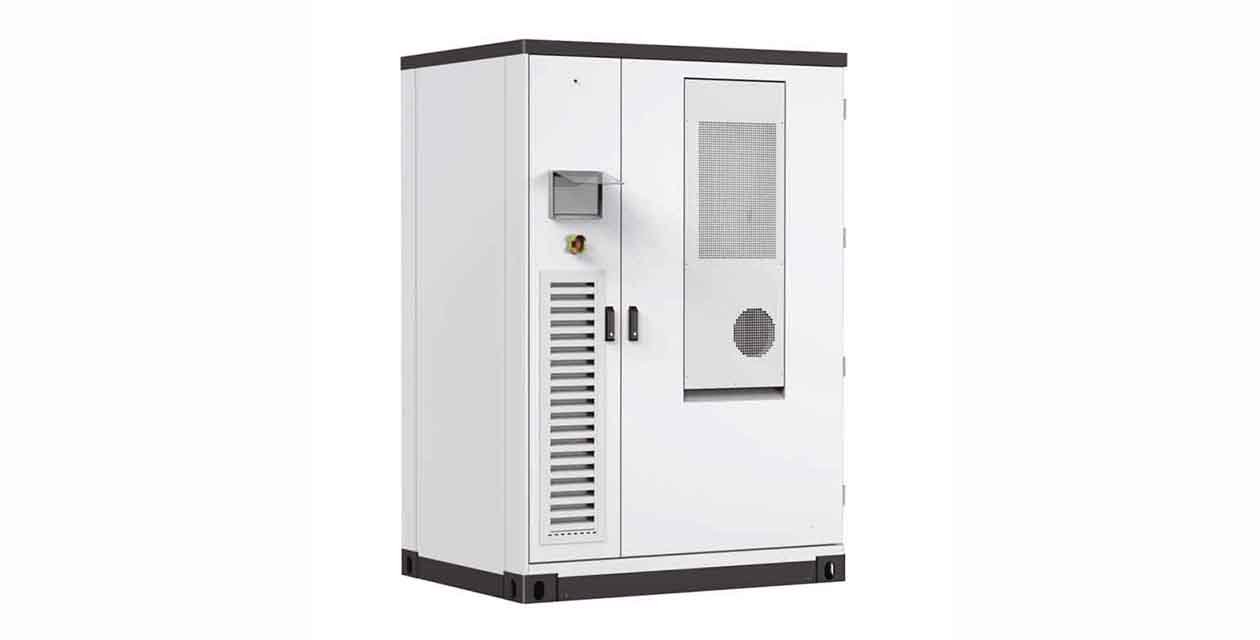
Our company’s outdoor cabinet-type lithium iron phosphate battery systems with capacities of 120 kWh, 168 kWh, 217 kWh, and 241 kWh fully comply with Australia’s latest subsidy policies and regulatory requirements. All products have obtained RCM certification, meet the AS/NZS 62040.1.1 Energy Storage System Safety Standard and AS/NZS 62133 Lithium Battery Safety Standard, and have been successfully included in the CEC certification product catalog, satisfying the stringent compliance requirements stipulated by policies.
The product’s competitive advantages are precisely tailored to meet energy storage requirements in Australian industrial and commercial applications. Featuring an outdoor cabinet-style integrated design with IP65 dust/water resistance and shockproof certification, it adapts seamlessly to Australia’s high-temperature, high-sunlight climate. The lithium iron phosphate battery system ensures exceptional safety while incorporating a multi-tiered BMS management system to balance stability and longevity. With capacity ranging from 120-241kWh, it flexibly accommodates diverse industrial and commercial needs. The system supports parallel cabinet expansion, enabling efficient energy storage solutions for daily operations and peak-valley load management, while integrating with photovoltaic systems to maximize clean energy utilization – fully aligned with national policy objectives.
The Australian energy storage market is currently experiencing a period of policy incentives, where compliant and adaptable products are key to seizing market opportunities. Our industrial-commercial integrated energy storage systems, featuring stringent compliance standards and scenario-specific product advantages, precisely align with policy directives and market demands. They empower Australian industrial and commercial users to reduce electricity costs and achieve energy transition, making them an optimal choice for entering the Australian energy storage market.
.