
The underlying logic behind fluctuations in European electricity prices: Energy storage is becoming the core infrastructure of the energy transition
In recent years, Europe’s electricity market has frequently experienced high electricity prices, negative prices, and significant price volatility. As the share of renewable energy continues to rise, Europe’s energy system is accelerating its transition from a traditional “stable-supply” model to a “volatility-balanced” one. In this process, energy storage systems (ESS) are becoming crucial for stabilizing the grid, reducing electricity costs, and enhancing energy security.
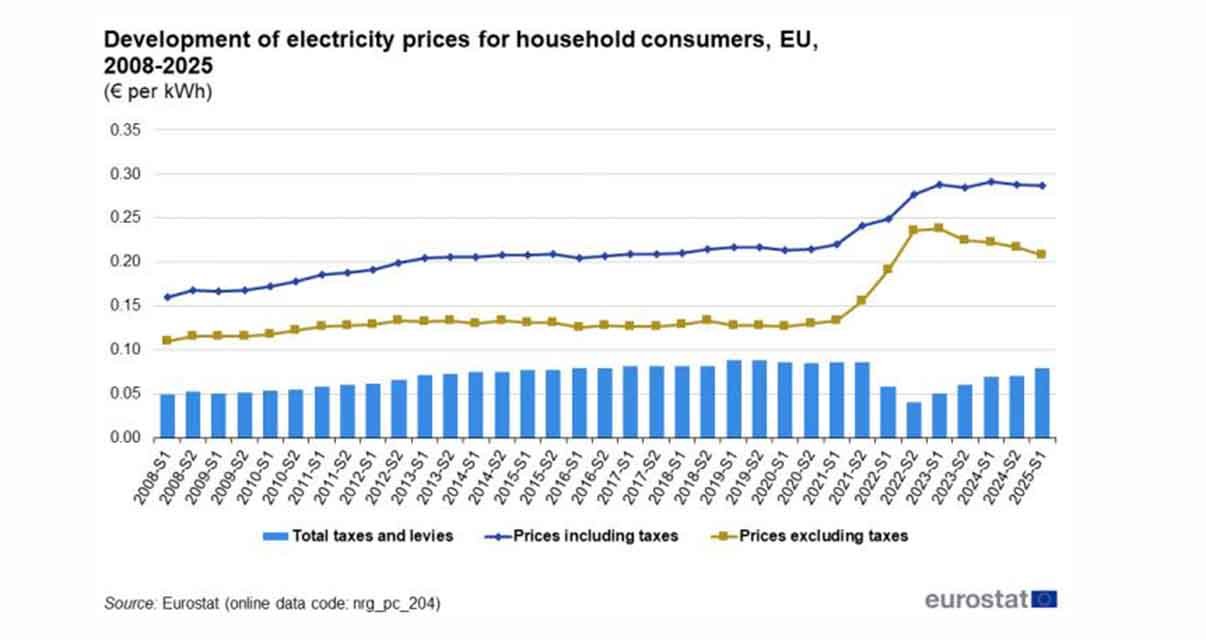
Why do European electricity prices fluctuate continuously?
The key factors currently influencing electricity prices in Europe include the following:
1. The share of renewable energy is rising rapidly
According to relevant European statistics, renewable energy has become the primary source in Europe’s power mix, with wind and solar power accounting for an increasingly larger share.
However, wind and solar energy are inherently intermittent. When wind conditions are insufficient or during rainy weather, power generation declines significantly, forcing the grid to rapidly rely on natural gas or coal-fired power for supplementation, thereby driving up electricity prices.
In May 2026, Germany saw electricity prices rise by nearly 29% in a single day due to increased cooling demand caused by extreme heatwaves and a significant drop in wind power generation.
2. The frequent occurrence of negative electricity prices highlights the system’s insufficient flexibility.
With the rapid growth of photovoltaic installations in Europe, the issue of power oversupply during midday hours has become increasingly pronounced.
Data shows that the frequency of negative electricity prices has significantly increased across multiple European power markets by 2025, with Germany alone experiencing 44 hours of negative pricing in the first quarter.
Negative electricity prices mean that power generation companies sell electricity at a loss, fundamentally reflecting the following reality:
- The power grid lacks sufficient regulation capacity.
- Insufficient energy storage capacity
- The mismatch between electricity supply and demand is worsening.
- Lack of system flexibility
This is also a key reason why multiple European countries have begun accelerating the deployment of large-scale energy storage power stations.
What energy storage opportunities are emerging in the European energy market?
Against the backdrop of the energy transition, the European energy storage market is entering a phase of rapid growth.
Industry forecasts indicate that Europe’s newly installed energy storage capacity is expected to grow by over 100% year-on-year in 2026, with particularly strong demand in Southern and Eastern Europe as well as Germany.
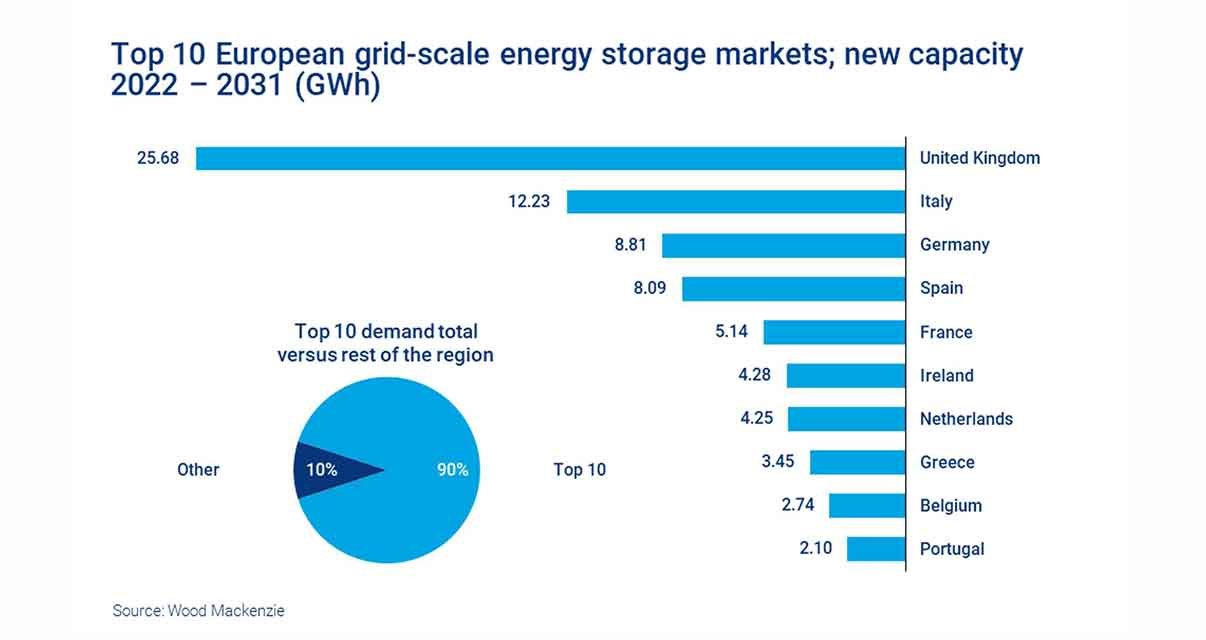
Current energy storage demand in Europe primarily stems from the following sources:
1. Frequency Regulation and Peak Shaving on the Grid Side
As the share of renewable energy increases, the power grid requires more rapid-response resources to maintain stable frequency.
The energy storage system can respond within milliseconds:
- frequency modulation
- load equalization
- Peak-valley Arbitrage
- Backup power support
It is becoming one of the most critical flexibility resources in the European electricity market.
2. Reducing electricity cost risks for industrial and commercial users
With electricity prices in Europe continuing to fluctuate increasingly, a growing number of industrial and commercial users are adopting the “photovoltaic + energy storage” model to reduce energy costs.
This is especially true in countries with high electricity prices, such as Germany, Italy, and Spain:
- The price difference between peak and off-peak hours has widened.
- The uncertainty surrounding electricity procurement has increased.
- The pressure on corporate energy costs is increasing.
Energy storage systems can help businesses achieve the following:
- Peak discharge
- Charging during the grain harvest season
- Reduce the electricity cost associated with demand fluctuations.
- Enhance energy independence.
This significantly optimizes long-term electricity costs.
3. Demand for residential energy storage continues to grow
Driven by energy security concerns and geopolitical factors, European households are increasingly prioritizing energy independence.
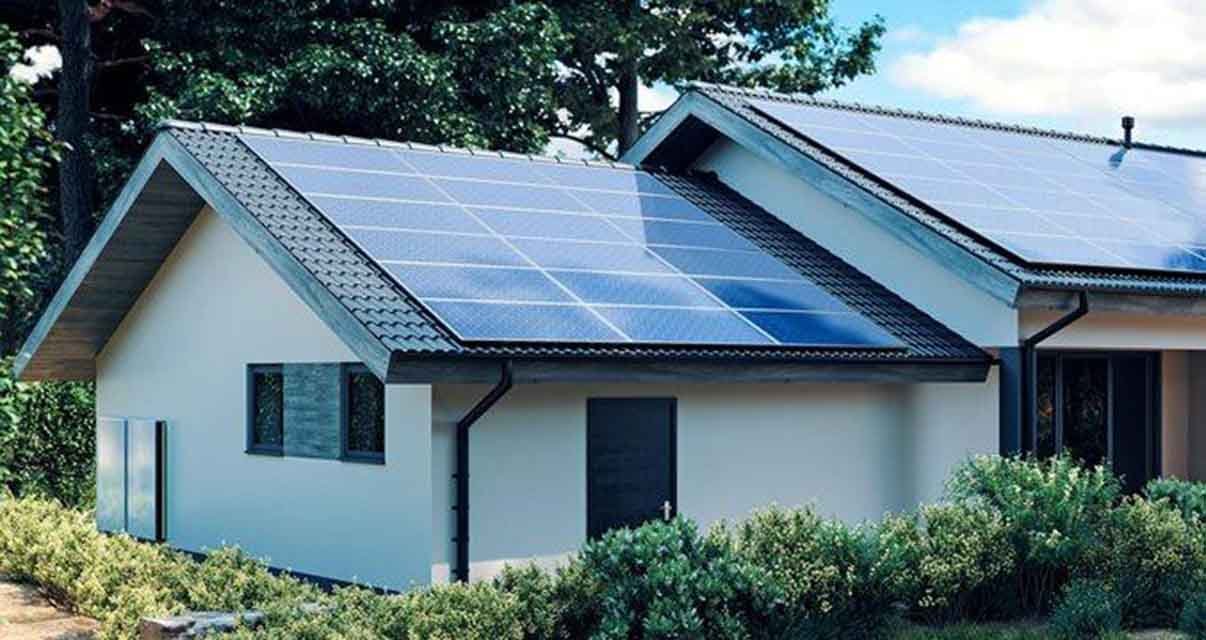
Currently, “residential solar-storage systems” have become a key focus for household energy upgrades in Europe:
- Daytime photovoltaic power generation
- Energy storage for nighttime power supply
- Power outage backup
- Reduce electricity bill expenses
Especially in markets such as Germany and the UK, household savings penetration rates continue to rise rapidly.
Insights from European Electricity Price Fluctuations for the Global Energy Storage Industry
The European market is sending a clear signal:
The core competitiveness of future energy systems lies not merely in “power generation capacity,” but rather in “flexible regulation capability.”
As the proportion of new energy sources continues to increase:
- Energy storage will become a standard feature of the new power system.
- The value of grid flexibility continues to increase.
- The energy storage business model is becoming increasingly mature.
- The integration of AI-powered energy management systems with virtual power plants is accelerating rapidly.
In the future, energy storage will not only serve as backup equipment but also become a crucial gateway for energy trading, demand response, and smart energy management.
moPower: Empowering the Global Energy Transition
As a leading provider of professional energy storage solutions, moPower remains committed to the following priorities:
- Residential Energy Storage System
- Industrial and commercial energy storage systems
- lithium cell PACK
- Integrated Solar and Storage Solution
- Intelligent Energy Management System
In response to the global energy transition trend, moPower is committed to providing customers with safer, more efficient, and smarter energy storage solutions, helping users reduce energy costs, improve energy efficiency, and advance a green, low-carbon future.
With the continuous expansion of the European energy storage market, the industry is embracing a new wave of global development opportunities.