158 GW/459 GWh! Global energy storage enters a new phase of rapid growth in 2026
Recently, Bloomberg New Energy Finance (BloombergNEF) released its “Energy Storage Market Outlook for the First Half of 2026” report. The report indicates that global energy storage installations reached 112 GW/307 GWh in 2025, with projections showing a year-on-year increase of 41% to 158 GW/459 GWh in 2026. Against the backdrop of slowing growth in new solar and wind farm installations worldwide, the energy storage market has demonstrated strong growth resilience.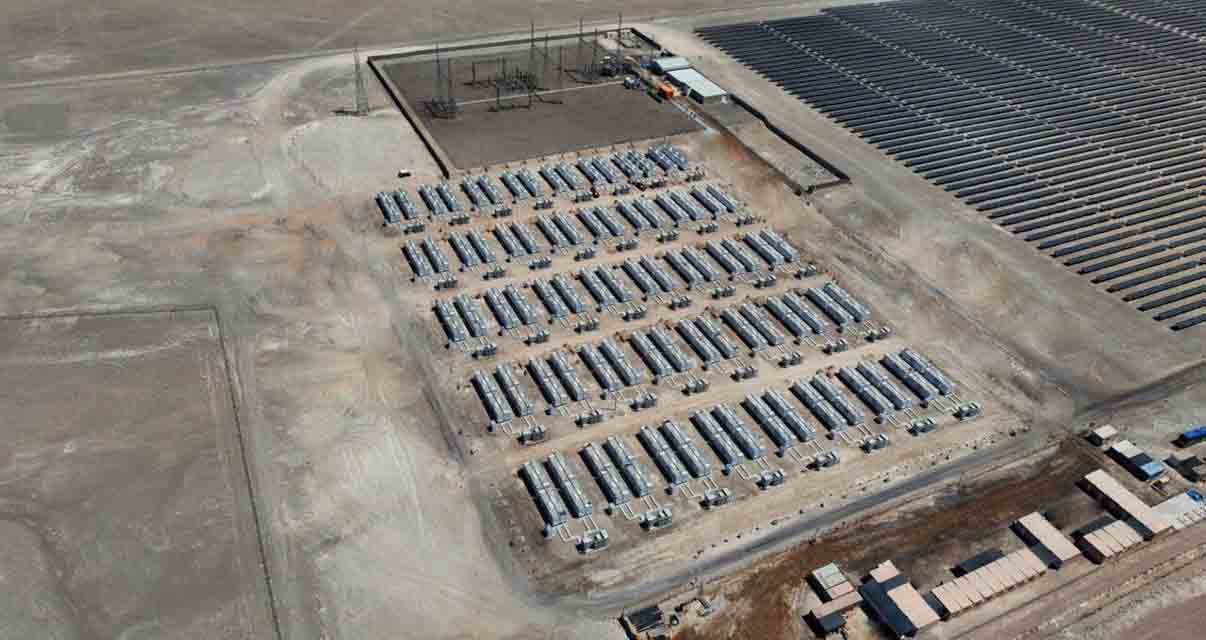
I. The Global Energy Storage Market: From the Gigawatt Era to Tenfold Growth Over a Decade
BNEF data shows that global annual new energy storage capacity installations surged from 10 GW to over 100 GW in just four years—a pace far exceeding the eight years required for solar power plants and fifteen years for wind farms. This vividly demonstrates the rapid growth trajectory of the energy storage industry.
Looking ahead, BNEF projects that global annual new energy storage installations will nearly double over the next decade, reaching 308 GW by 2036. By the end of 2036, the cumulative deployed energy storage capacity worldwide will reach 2.9 TW/10.5 TWh—approximately ten times the level recorded in 2025.
The cost of energy storage is also declining at an accelerating pace. By 2025, the global benchmark cost for 4-hour battery storage will drop to $78/MWh, representing a 27% year-on-year reduction, which significantly enhances the economic viability of energy storage projects.
II. Why is the global energy storage market continuing to experience explosive growth?
In recent years, global wind and solar power installations have grown rapidly. However, renewable energy generation is characterized by intermittency and volatility, significantly increasing the grid’s demand for flexible regulation resources. Energy storage systems effectively enable peak shaving, valley filling, frequency and voltage regulation, backup power supply, and renewable energy integration, making them a critical component in the global energy transition.
From a market-driven perspective, the current global growth in energy storage primarily stems from the following factors:
- The large-scale grid integration of photovoltaic and wind power is driving up the demand for distribution and storage systems.
- The demand for energy security continues to rise in regions such as Europe, North America, and the Middle East.
- Electricity market reform is driving the gradual maturation of energy storage business models.
- The cost of lithium batteries continues to decline, enhancing the economic viability of energy storage projects.
- New types of loads such as AI data centers and electric vehicle charging networks are growing rapidly.
Especially in European and American markets, demand for industrial and commercial energy storage as well as residential energy storage continues to grow, while emerging markets such as the Middle East, Latin America, and Southeast Asia are also entering a peak period for energy storage infrastructure development.
III. China leads global energy storage growth, with policy dividends continuing to materialize
In 2025, China and the United States accounted for approximately 70% of the global total newly installed energy storage capacity, with China contributing 61.1 GW/173.1 GWh, representing a year-on-year increase of 54%.
In early 2026, the National Development and Reform Commission and the National Energy Administration issued Document No.114, which for the first time explicitly granted capacity tariffs to new energy storage systems—a move hailed by the industry as “completing the final piece of the puzzle for their profitability.” The internal rate of return (IRR) on energy storage investments across provinces could increase by 3 to 4 percentage points, significantly enhancing project economics. In January and February 2026, the year-on-year growth rates of monthly domestic energy storage bidding capacities reached 46.81% and 65.67%, respectively, indicating sustained upward momentum in installation demand.
Meanwhile, the “2026 Energy Storage White Paper” points out that the industry is transitioning from policy-driven to market-led high-quality development, with the China energy storage market projected to achieve a compound annual growth rate of 20.7%–25.5% from 2026 to 2030.
IV. Three Major Driving Forces Redefining the Global Energy Storage Landscape
Computing-electricity synergy and emerging demands are gaining prominence. For the first time, computing-electricity synergy was included in the government work report, with AI computing infrastructure emerging as a new driver for energy storage growth. The global energy storage growth is now driven by three factors: the integration of renewable energy, the imperative of energy transition, and grid capacity constraints. By 2026, global newly installed energy storage capacity is projected to reach 438 GWh, representing a 62% year-on-year increase.
The large-scale application of non-lithium technologies has begun. Wood Mackenzie notes that 2026 is a pivotal year for supply chain restructuring and the rise of non-lithium batteries, with technologies like sodium-ion batteries accelerating their commercialization. CATL and Haibosichuang announced a multi-year cooperation agreement for 60 GWh of sodium-ion batteries, marking the beginning of widespread adoption of this technology.
Emerging markets are experiencing rapid growth. In Sub-Saharan Africa, energy storage deployment is projected to triple year-on-year by 2025, adding 4.3 GW/8.8 GWh, with cumulative installations expected to reach 155 GW/439 GWh by 2036. Regions such as the Middle East and Europe continue to see rising demand for energy storage driven by geopolitical conflicts and policy incentives.
V. moPower: Delivering efficient energy storage solutions to global customers
As a leading provider of professional energy storage system solutions, moPower’s official website https://mopower360.com/consistently focuses on comprehensive solutions for lithium battery packs, residential energy storage systems, industrial and commercial energy storage systems, and solar energy storage systems.
The company’s products are widely used in:
- Home solar energy storage system
- Industrial and commercial enterprises reduce peak demand and fill the gaps in demand.
- Off-grid power supply system
- Energy storage for communication base stations
- Integrated Solar, Storage, and Charging Project
Leveraging high-security lithium iron phosphate (LiFePO4) technology, an intelligent BMS management system, and a modular design, moPower delivers more stable, safer, and more efficient energy storage solutions to global clients, supporting the worldwide green energy transition.
VI. Outlook and Conclusion
BNEF forecasts that by 2036, the global cumulative energy storage capacity will reach 2,867 GW/10,514 GWh. With advancing technological maturity, continuous cost reductions, and improved policy frameworks, global energy storage is entering a new era characterized by trillion-dollar-scale development.
Against the backdrop of the “dual carbon” goals and global energy transition, the energy storage industry still holds significant growth potential. For enterprises, proactively developing high-safety, high-efficiency, and intelligent energy storage products will represent a crucial opportunity to capture future market share.