What lessons have been learned from power outages in Spain and Portugal?
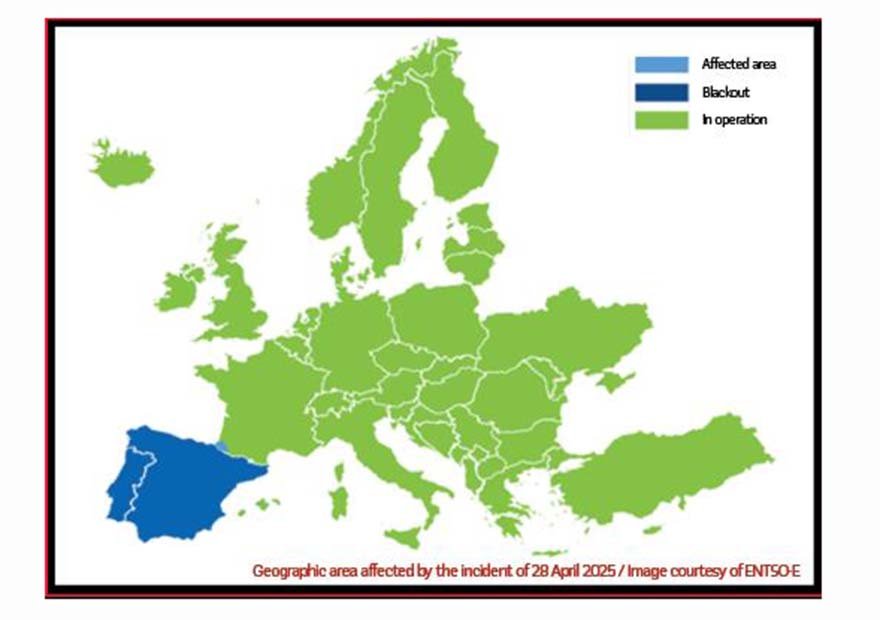
At 12:33 PM on April 28,2025, the Iberian Peninsula where Spain and Portugal are located experienced Europe’s worst power outage in over two decades. Within just 90 seconds, more than 2.5GW of power generation units went offline. Spain lost approximately 60% of its electricity supply in five seconds, plunging over 50 million people into darkness. Transportation systems ground to a halt, communications were disrupted, and hospitals were forced to activate backup generators. This massive blackout struck like a heavy hammer, sounding a safety alarm in the global energy transition process.
1.Root Cause of the Accident: “Systemic Dysfunction” Under High Penetration of New Energy
Expert investigations revealed that Spain’s power grid lacked sufficient regulation capacity, particularly the absence of reactive power regulation capabilities, which was the primary cause of the incident. By the end of 2023, renewable energy accounted for 66.2% of Spain’s installed capacity, while energy storage systems represented only 2.7%. On the day of the accident, after experiencing a voltage surge, renewable energy facilities operating under fixed power factor control failed to adaptively provide dynamic voltage support. Operators also failed to promptly activate sufficient thermal power plants to absorb overvoltage, leading to a series of cascading grid disconnections. The entire sequence from initial grid separation to system collapse occurred within less than 30 seconds.
2.Key Insights: Energy Storage Industry Faces Three Major Transformation Opportunities
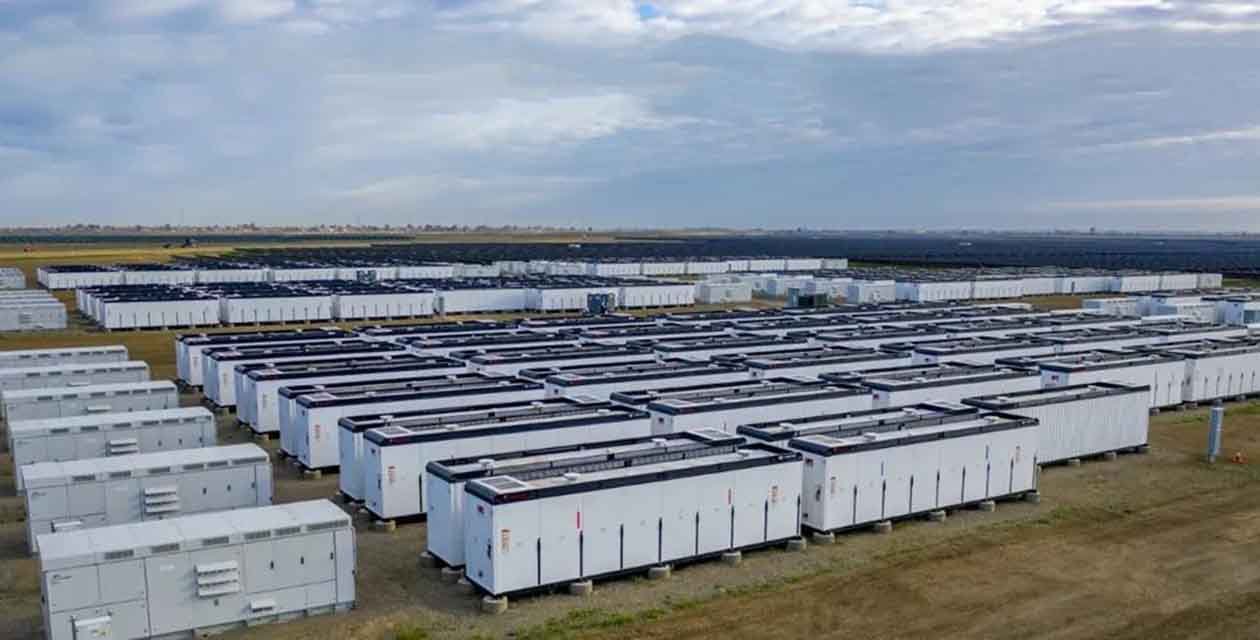
Insight 1: Grid-connected energy storage will transition from being optional to mandatory. The EU’s forthcoming NC RfG 2.0 regulation explicitly requires that all new energy storage projects exceeding 1MW must possess grid integration capabilities, enabling active participation in grid voltage and frequency regulation similar to synchronous generators. Future energy storage facilities should no longer be regarded as mere energy management devices, but rather as verifiable system stability control resources.
Insight 2: The demand for energy storage backup power in industrial, commercial, and household scenarios is expected to surge. During this power outage lasting nearly 23 hours, critical infrastructure such as transportation, telecommunications, and healthcare systems nearly came to a standstill after the grid collapse. Reliable backup power storage solutions will become an essential requirement for critical infrastructure including hospitals and data centers, as well as for industrial and commercial users and even ordinary households.
Insight 3: Dual policy and market forces are accelerating industry restructuring. Spain has enacted a royal decree setting a 2030 energy storage capacity target of 22.5GW while streamlining approval procedures. Portugal plans to launch battery storage auctions and allocate €25 million for backup power deployment in critical infrastructure. The EU has unveiled a €1.2 trillion grid investment plan through 2040.
3.moPower: Accurately Aligning with Trends to Seize Market Opportunities
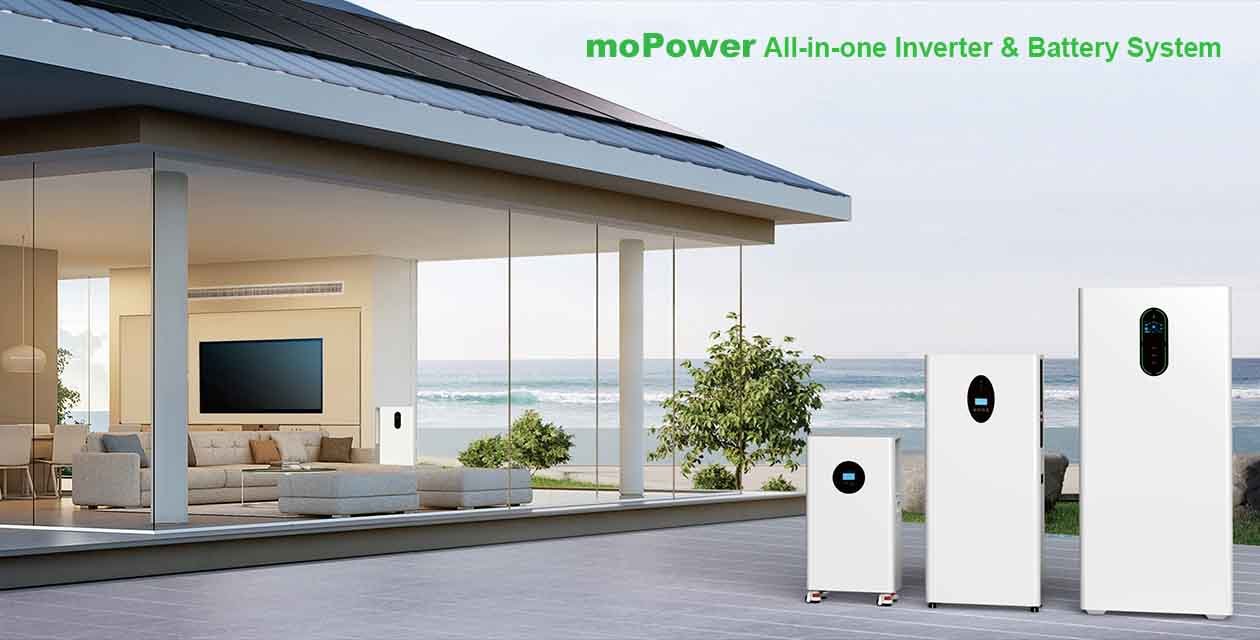
3.1 Product Level: The Value of All-in-One Energy Storage Systems Becomes Evident
The “All-in-One Energy Storage System” by moPower offers the following advantages:
- High integration: Reduces deployment complexity
- Rapid response: Suitable for frequency regulation and emergency power supply
- Modular design: Adapted for multi-scenario applications
This perfectly aligns with the European market’s demand for’ rapid deployment and high reliability’.
3.2 moPower has been deeply engaged in the energy storage sector, consistently prioritizing technological innovation and market insights. In response to the systemic issues exposed by the West Portugal blackout, the company will focus on the following strategic directions:
First, technological advancement—from “following the grid” to “building the grid.” The company will accelerate the research, development, and application of grid-structured energy storage control technologies, enabling energy storage systems to achieve millisecond-level response capabilities, autonomous reactive power regulation, and virtual inertia support. This transformation ensures that every MOPOWER energy storage device becomes an “active contributor” to grid stability rather than a “passive follower.”
Second, scenario expansion – deepening energy storage and backup power solutions for industrial-commercial sectors and critical infrastructure. Leveraging the company’s mature product portfolio and solution capabilities, we focus on serving key power consumption scenarios such as manufacturing parks, data centers, medical institutions, and transportation hubs. We provide integrated “energy storage + backup power” solutions to ensure uninterrupted core business operations even during grid fluctuations or outages.
Third, global strategy deployment – capitalizing on the policy window period for energy storage in Europe. The company will continue to monitor market dynamics in the European energy storage sector, providing energy storage products and solutions that comply with local grid connection standards and technical requirements in response to EU regulations and national subsidy policies, thereby assisting overseas clients in enhancing power supply security and economic efficiency.
4.Conclusion
The widespread power outages in Spain and Portugal fundamentally reflect the ‘system capacity lag’ during the energy transition process.
It sends a clear signal: energy storage is no longer a supporting role, but rather the ‘stabilizer’ and ‘safety foundation’ of the new power system.
The West Portugal blackout served as a painful lesson and a significant opportunity for the accelerated development of the energy storage industry. moPower will adopt a core strategy of ‘technology-driven innovation, scenario-based implementation, and global expansion,’ striving to become a world-leading provider of energy storage system solutions and contribute to building a safer, more stable, and reliable power future.