A record-breaking order of 1 GW/100 GWh has been secured! Ultra-long-duration energy storage is ushering in a new wave of AI computing power
Key Summary: In April 2026, Meta entered into a storage reservation agreement with Noon Energy, a leader in ultra-long-duration energy storage technology, for a capacity of up to 1 GW/100 GWh, marking the official entry of this technology into a new phase of commercialization. As a professional solutions provider in the energy storage sector, moPower (mopower360.com) provides an in-depth analysis of how this milestone event is reshaping the industry landscape.
I.Event Review: Ultra-Long-Term Energy Storage: From Concept to Reality
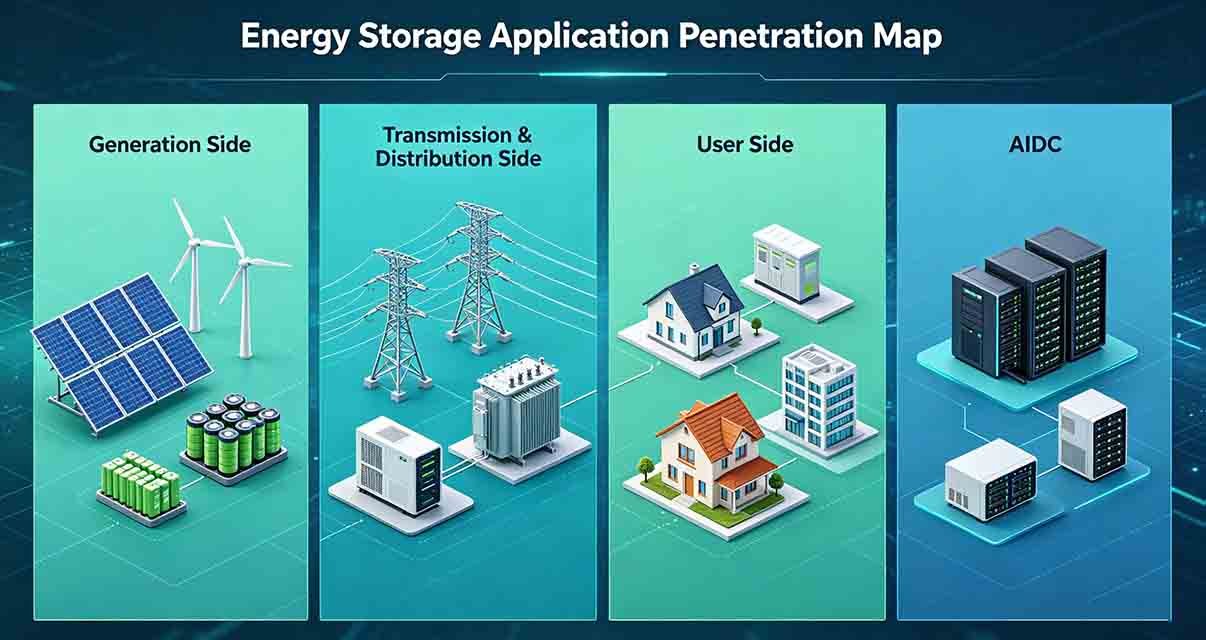
On April 21,2026, Palo Alto-based Noon Energy announced a landmark partnership with tech giant Meta, under which the two companies plan to deploy a combined energy storage capacity of up to 1 GW/100 GWh to ensure uninterrupted power supply for AI data centers. The initial pilot projects, with a scale of 25 MW/2.5 GWh, are scheduled for completion in 2028. The scale and innovative technical approach of this agreement have rapidly drawn significant attention from the global energy storage industry.
Noon Energy’s core technology is the reversible solid oxide fuel cell (rSOC), capable of providing continuous power for over 100 hours. It has operated successfully for thousands of hours in a fully containerized pilot project, achieving an energy storage capacity exceeding 200 hours. The system stores energy in a carbon-based medium, with both energy and power capacities scalable independently. The system costs less than $20/kWh, resulting in a levelized cost of electricity (LCOE) of approximately 6 cents/kWh. Notably, its key material usage amounts to only about 1% of that required by traditional lithium-ion batteries, effectively mitigating price fluctuation risks in the lithium supply chain.
For Meta, its AI data centers require uninterrupted, reliable power supply around the clock, a demand that traditional 4-hour energy storage systems cannot meet. Noon Energy’s over 100-hour storage capacity directly addresses this critical challenge.
II.Deep Industry Impacts: From Scale Competition to Value Reconstruction
(1) Long-duration energy storage reaches a turning point in its development
This mega-order from Meta and Noon Energy sends a strong signal to the market: the explosive demand for AI computing power is driving the growth of a robust market for time-of-use energy storage. In the first two months of 2026, the average duration of cumulative installed capacity for China’s new energy storage systems increased from 2.11 hours to 2.58 hours, and is projected to further rise to 3.47 hours by 2030. Data on domestic new energy storage installations in January 2026 showed that the growth rate of energy storage capacity (up 106% year-on-year) far exceeded that of power capacity (62%), indicating that industry competition is shifting from “scale-based rivalry” to “duration-driven dominance.”
It is foreseeable that long-duration energy storage systems with capacities exceeding four hours will accelerate their adoption in scenarios such as power system peak shaving and distributed energy integration. Different technological approaches—including lithium-ion batteries, flow batteries, and compressed air energy storage—will undergo a new round of consolidation in the long-duration energy storage market.
(2)AI Data Center Unveils a New Blue Ocean for Trillion-Level Energy Storage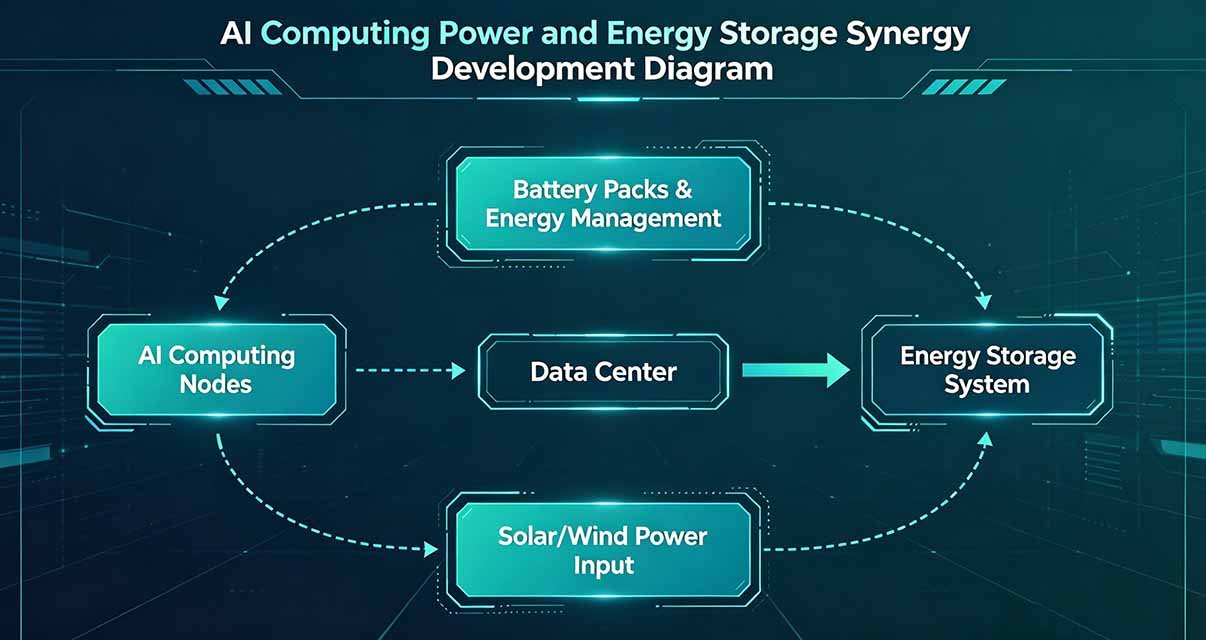
“Computing-Energy Synergy” has been incorporated into the 2026 Government Work Report, establishing it as a key national strategic priority. Industry analysts project that the global AI Energy Storage (AIDC) market will exceed 300 GWh between 2026 and 2030, reaching a scale of hundreds of billions. Energy storage is evolving from a traditional supporting infrastructure for renewable energy to a core component essential for sustaining AI computing power and grid stability.
For energy storage companies, the AIDC market not only offers substantial growth potential but also imposes stricter requirements on the reliability, response speed, energy density, and safety of energy storage systems, thereby accelerating technological innovation across the industry.
(3) Dual Drive of Policy and Market Accelerates the Realization of Energy Storage Value
Since 2026, the policy landscape for the energy storage industry has undergone profound transformations. Document No.136 abolished mandatory energy storage requirements, while Document No.114 introduced a capacity-based electricity pricing mechanism, granting energy storage the status of an independent market entity. By the end of 2025, China had 470 virtual power plant projects with a maximum regulation capacity of 16.85 GW, representing a year-on-year increase of approximately 70%. Diverse entities such as advanced energy storage systems and virtual power plants have now entered the market legally and in an orderly manner.
Meanwhile, over 10 provinces across China have abolished fixed time-of-use electricity pricing, while 23 pilot electricity spot markets have commenced operations. The profitability model for energy storage is evolving from simple peak-valley arbitrage to a triple revenue stream comprising electrical energy, ancillary services, and capacity compensation.
(4) Comprehensive Enhancement of the Safety and Standards System
With the rapid expansion of energy storage capacity, safety standards have been correspondingly enhanced. The newly revised “Design Standard for Electrochemical Energy Storage Power Stations” (GB/T 51048-2025) and the “Fire Protection Design Guidelines for Electrochemical Energy Storage Power Stations” have been successively issued and implemented, establishing clear regulations on site selection, fire compartmentation, and automatic fire suppression systems for energy storage facilities. Safety has become one of the core competitive advantages in the energy storage industry.
III.Industry Trend Outlook: The Energy Storage Industry Enters a New Phase of High-Quality Development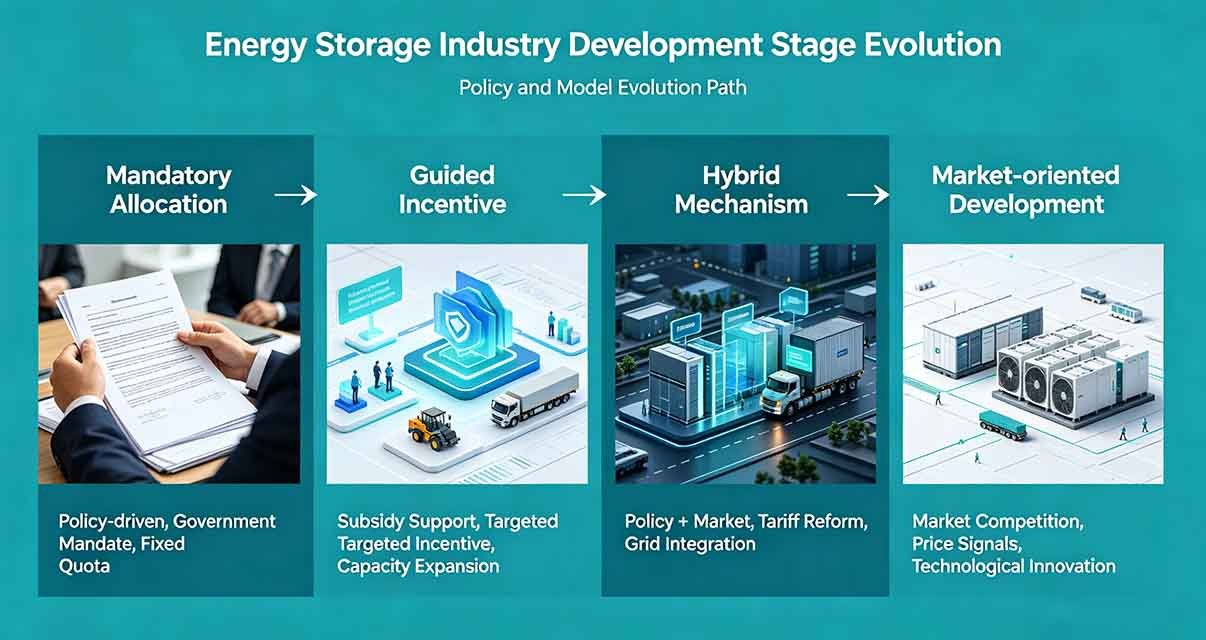
Overall, the long-term energy storage partnership between Meta and Noon Energy serves as a microcosm of the energy storage industry’s evolution:
- Technological diversification is accelerating: multiple technological approaches—including lithium iron phosphate, sodium-ion, flow batteries, and solid-state batteries—are advancing concurrently to meet the demands of diverse application scenarios.
- The business model continues to innovate: As the arbitrage gap between peak and off-peak periods narrows, diversified revenue models—including demand management, virtual power plant aggregation, and capacity leasing—are gradually maturing.
According to the “Energy Storage Industry Research White Paper 2026” released by CNESA, under conservative scenarios, China’s cumulative capacity of new energy storage will reach 371.2 GW by 2030, with a compound annual growth rate (CAGR) of 20.7% from 2026 to 2030; under ideal scenarios, it could reach 450.7 GW, with a CAGR of 25.5%. Although the industry has entered a phase of slower growth, the absolute increase will remain substantial.
IV. Conclusion
From Meta’s billion-dollar mega-order to the profound transformation of China’s electricity market, the energy storage industry stands at a historic strategic inflection point. The rise of ultra-long-duration energy storage, the explosive demand for AI data centers, and the maturation of market-oriented mechanisms collectively form the three driving forces behind the industry’s development.
For energy storage enterprises, challenges and opportunities coexist. Only by solidifying their technological foundations, strategically positioning themselves in specific application scenarios, and establishing comprehensive lifecycle service capabilities can they achieve sustainable growth amidst the wave of high-quality development in energy storage during the 15th Five-Year Plan period.
moPower specializes in integrated energy storage system solutions, offering R&D for industrial and commercial energy storage products, project design, EPC turnkey contracting, and smart operation and maintenance services, continuously empowering clients to seize opportunities arising from industry transformation.