Lithium-Ion vs Lead-Acid Battery: Which Is Better for Residential Energy Storage?
With the rapid growth in demand for home photovoltaic systems and backup power solutions, home energy storage systems have become an increasingly important choice for households seeking energy independence. Within these systems, batteries serve as the core component. The current mainstream market offerings primarily fall into two categories: lithium-ion batteries and lead-acid batteries. So, how should one select the right home energy storage system?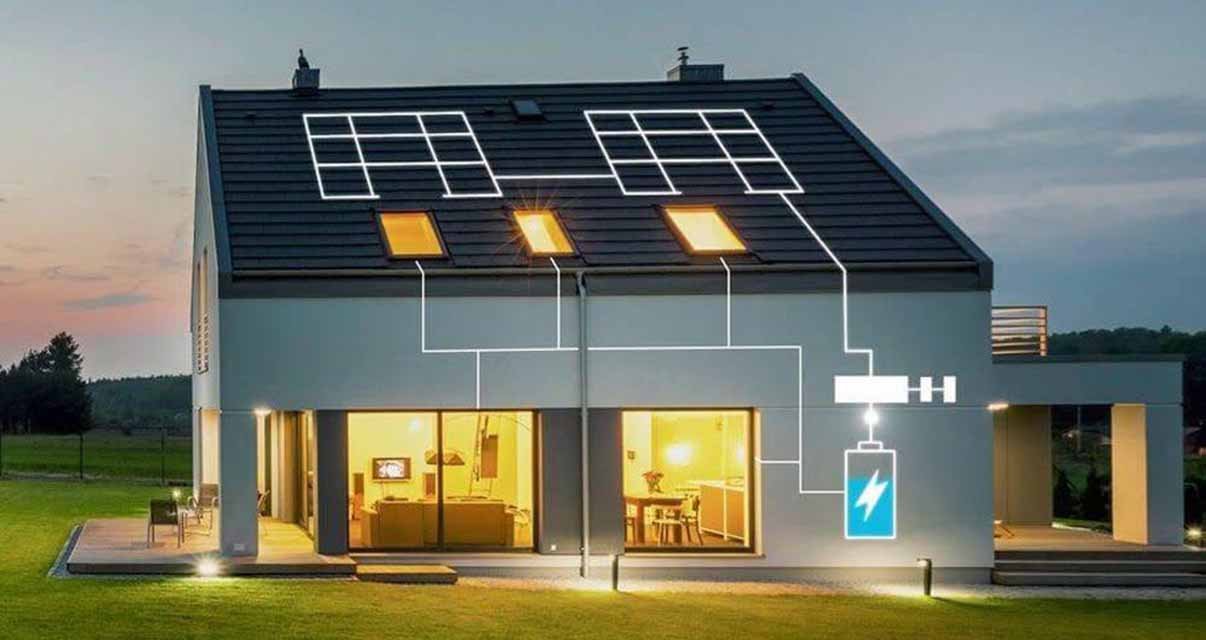
What is a home energy storage system?
A Home Energy Storage System is primarily designed to store electricity generated during solar hours or off-peak electricity rates, then release it during power outages, nighttime, or peak demand periods to ensure continuous power supply for household appliances.
Currently, an increasing number of households are integrating energy storage systems with photovoltaic systems to achieve the following benefits:
- Reduce electricity bill expenses
- Improve energy efficiency
- Power backup during outages
- Enhance energy independence
The fundamental difference between lithium-ion batteries and lead-acid batteries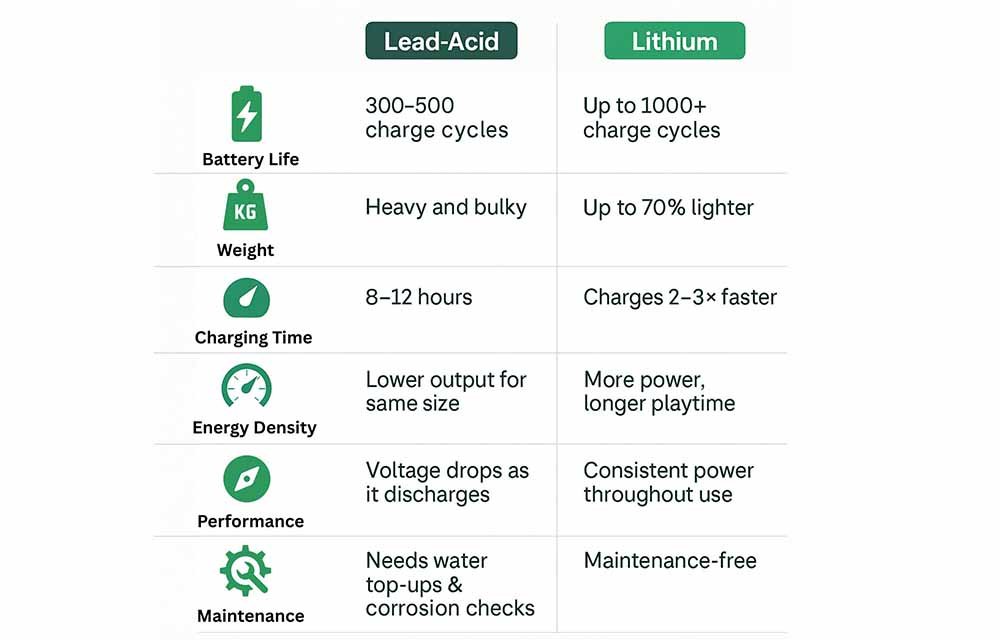
1. Service Life
Lithium-ion batteries, particularly LiFePO₄ (lithium iron phosphate) batteries, typically offer a cycle life exceeding 6,000 cycles, whereas conventional lead-acid batteries generally range from 500 to 1,200 cycles.
It means that :
- Lithium batteries can be used stably for over 10 years.
- Lead-acid batteries typically require replacement every 3 to 5 years.
In the long run, lithium batteries overall incur lower operating costs.
2. Energy Storage Efficiency
Lithium-ion batteries typically achieve a charge-discharge efficiency of over 95%, whereas lead-acid batteries generally range between 70% and 85%.
Higher efficiency means:
- Lower storage loss
- The utilization efficiency of photovoltaic power generation is higher.
- More suitable for daily household reuse
3. Safety
In the past, many people were concerned about the safety of lithium batteries. However, today’s mainstream household energy storage systems predominantly employ LiFePO₄ technology, which offers significantly enhanced thermal stability and safety.
Modern lithium energy storage systems are typically equipped with:
- BMS Battery Management System
- Overcharge Protection
- Overcharge protection
- Temperature Monitoring
- short-circuit protection
In contrast, lead-acid batteries have the following disadvantages:
- Risk of acid solution leakage
- The weight is relatively high.
- The deep discharge capability is weak.
4. Installation and Space Requirements
Lithium-ion batteries offer higher energy density, making them more compact and lighter in weight for the same capacity, thus better suited for modern home installation environments.
Especially in:
- villa
- town house
- Small computer room
- Wall-mounted energy storage system
In this scenario, the advantages of lithium batteries become even more pronounced.
Which battery type is better suited for home energy storage?
Even with limited budgets and only occasional backup use, lead-acid batteries still have a certain market.
For modern household photovoltaic energy storage systems, lithium-ion batteries have gradually become the mainstream choice, for the following reasons:
- Longer lifespan
- More efficient
- Lower maintenance costs
- More intelligent management
- Enhanced scalability
- More suitable for high-frequency charging and discharging
In particular, LiFePO₄ energy storage technology has been widely adopted in household energy storage systems worldwide.
How does moPower create more reliable home energy storage solutions?
As a company specializing in the research, development, and manufacturing of lithium batteries and energy storage systems, moPower offers a range of home energy storage solutions, including:
- All-in-One Home Energy Storage System
- LiFePO₄ energy storage battery
- Integrated Solar and Storage Solution
- High/low-pressure energy storage system
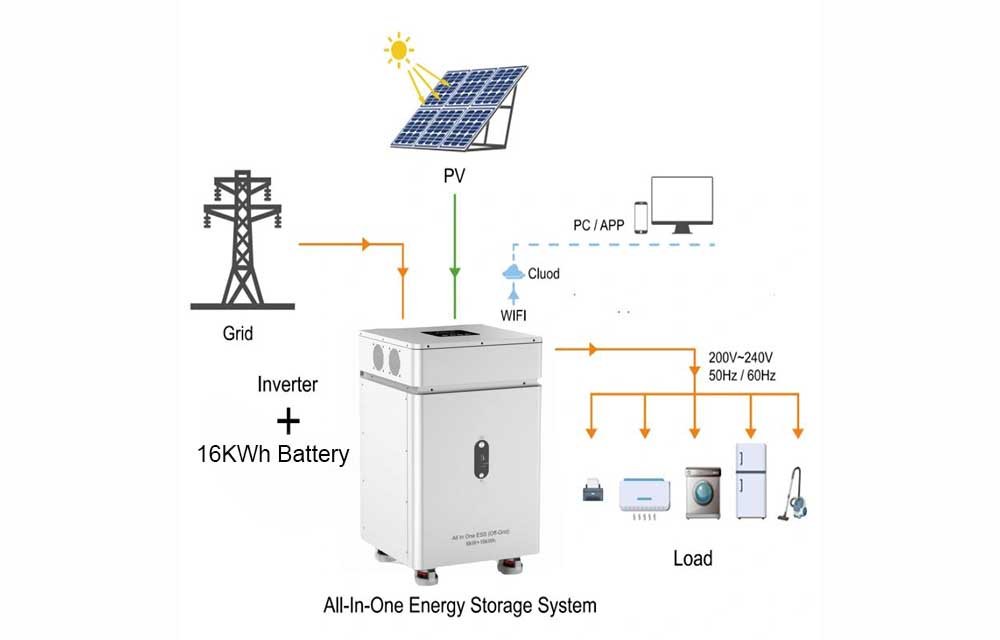 moPower boasts over 16 years of expertise in lithium battery technology, with its products widely used in residential energy storage, commercial and industrial energy storage, and the new energy sector.
for instance :
- 6 kW + 16 kWh household energy storage system
- Modular scalability design
- Intelligent BMS Management
- Supports off-grid and hybrid inverters
It helps families achieve more stable, secure, and efficient energy management.