
2026 Lithium Battery Technology Panorama: From Liquid to Solid-State, the Core Code of the Energy Revolution
Driven strongly by the “carbon neutrality” goal, the global new energy industry is experiencing explosive growth. In 2024, the penetration rate of new energy vehicles exceeded 40%, and the installed capacity of the energy storage market rose rapidly. All of this is inseparable from lithium batteries—the “heart” of the new energy era. From electric vehicles for daily travel to energy storage power stations supporting grid stability, from consumer electronics to aviation special equipment, each iteration of lithium battery technology is reshaping the industrial landscape. In 2026, this technological revolution has entered a deep-water zone, with liquid batteries continuing to upgrade, solid-state batteries accelerating their deployment, and diversified technical routes developing in parallel, jointly writing a new chapter in energy transformation.
I. Technical Map: The Core Showdown of Four Mainstream Routes
Competition in lithium battery technology is essentially a strategy to resolve the triangular contradiction among “energy density, safety, and cost”. At present, four mainstream routes have formed in the market: lithium iron phosphate, ternary lithium, semi-solid-state, and all-solid-state, each dominating in different scenarios.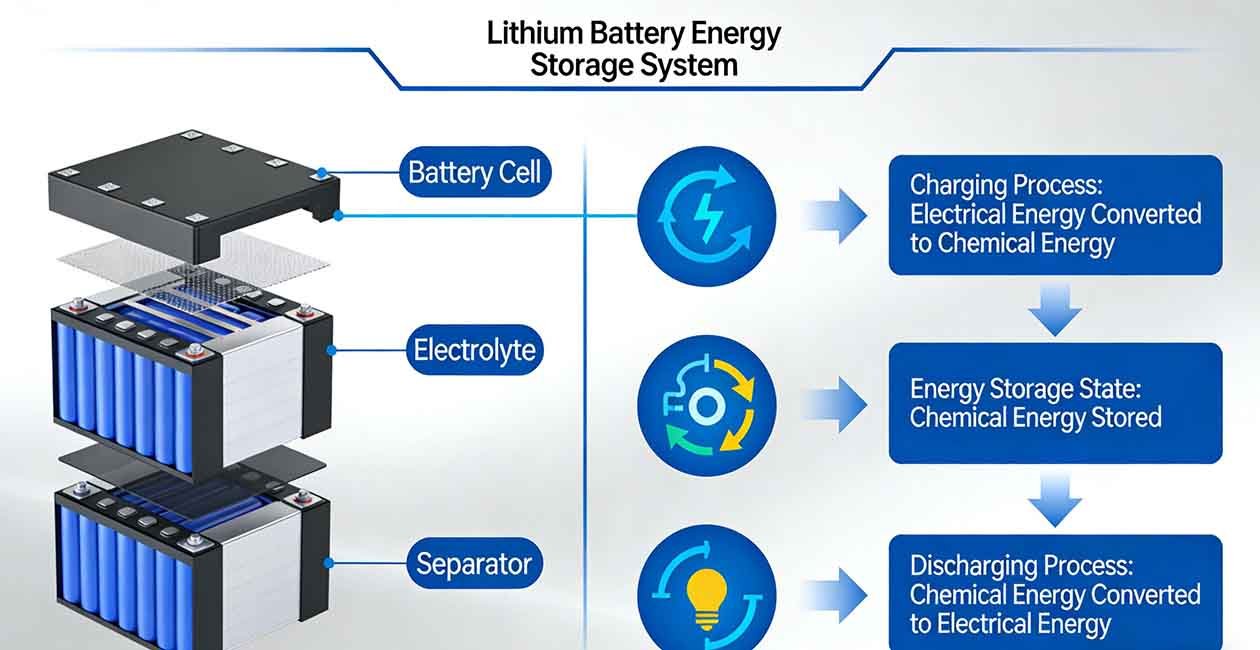
II. Core Breakthroughs: Dual Innovations in Materials and Structures
The leap forward in lithium battery technology in 2026 stems from the two-way efforts of material system optimization and structural design innovation, comprehensively improving battery performance from the micro to the macro level.
The cathode material sector has achieved diversified breakthroughs. In addition to surface modification technology for high-nickel ternary materials, lithium-rich manganese-based cathodes have emerged as a “dark horse” for low-cost and high-capacity applications.Technical bottlenecks in anode materials continue to be broken. Silicon-carbon anodes, with an ultra-high theoretical specific capacity of 4,200 mAh/g, have become key to enhancing energy density. Metal lithium anodes, through dual-gradient three-dimensional framework design, form a stable SEI layer in situ, maintaining a high Coulombic efficiency of 98% after 230 cycles.
Electrolyte technology innovations achieve a win-win between safety and fast charging. For liquid electrolytes, the “multi-component extrusion linkage strategy” enables coin cells to charge to 80% in 5 minutes, and pouch cells to achieve extreme 6C fast charging, solving the problem of poor thermal stability of traditional electrolytes.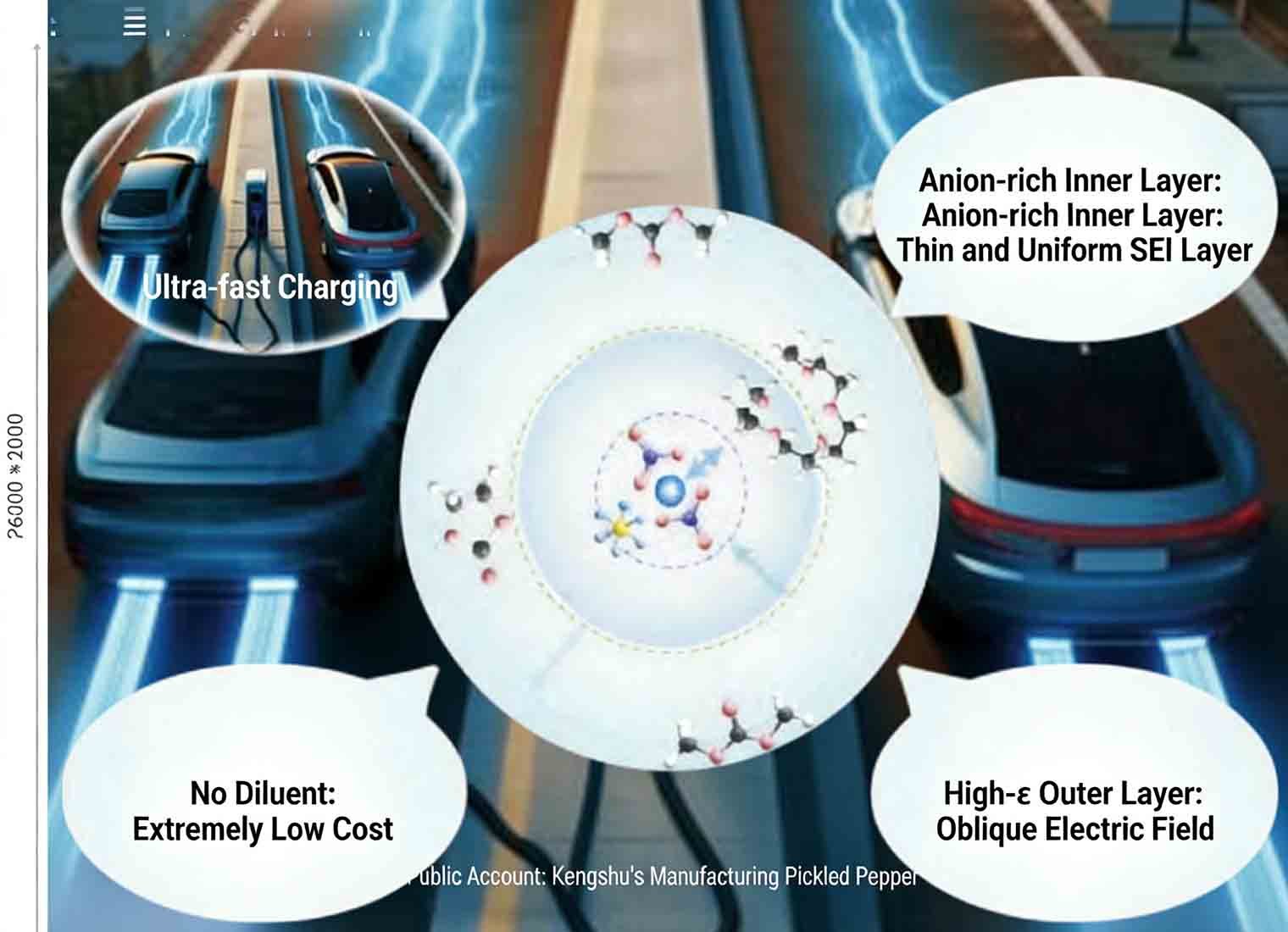
III. Global Landscape and Future Evolution: A Decade of Parallel Multi-Technical Routes
The global lithium battery industry currently forms a competitive landscape of a “Three Kingdoms”. China adopts an application-driven “agile innovation” model, rapidly realizing technological industrialization relying on its huge market size, and leads in semi-solid-state batteries and structural innovation; Japan and South Korea adhere to a technology-driven “excellence” model; Europe and the United States, driven by capital and ecology, support in-depth integration between start-ups and automakers to build a “R&D + application” alliance.