12.8V Series CI-BUS Communication Lithium Iron Phosphate Battery Solution for European RV Systems
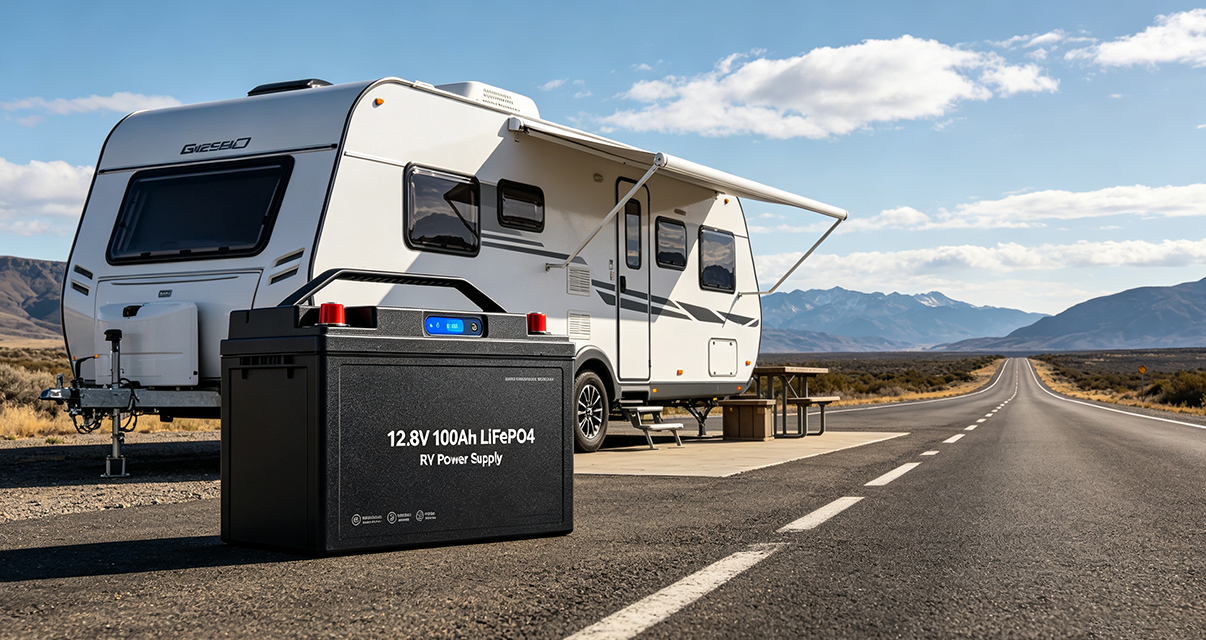
As European RVs undergo intelligent upgrades, traditional lead-acid batteries and conventional lithium-ion batteries are no longer adequate for meeting the integrated management requirements of comprehensive RV electrical systems. The adoption of 12.8V lithium iron phosphate batteries compliant with the CIVD CI-BUS bus standard, which enables digital interoperability between the battery BMS and the entire RV electrical system, represents a key technical requirement for integrating into the supply chains of both new-built and modified European RVs.
I. What is the CI-BUS Bus?
CI-BUS (Comfort Interface BUS) is an interior vehicle equipment interconnection standard developed by the German Caravan Industry Association (CIVD). Its physical layer is based on a two-wire LIN-BUS bus, distinguishing it from the conventional CAN bus. The bus architecture features a single master station with multiple slave stations: the Caravan Central Control Unit (CCU) serves as the sole Master station; the Battery Management System (BMS), MPPT solar controller, onboard charger, and inverter all function as Slave nodes connected to the bus, enabling bidirectional data exchange and command transmission between these devices. The protocol documentation is exclusively available to CIVD members.
> Note: CI-BUS = N-BUS; N-BUS is a Schaudt private bus. Although both use a two-wire hardware configuration, their protocols are incompatible, and the buses cannot be used interchangeably.
II. 12.8V C-BUS Battery Communication Targets and Operating Logic
The 12.8 V lithium iron phosphate battery’s BMS acts as a CI-BUS bus slave device; it does not establish direct point-to-point or MPPT-based communication with the charger – all interactions are routed through the RV Central Control Unit (CCU). The communication targets include four categories of core equipment:
1. RV Center Control Unit (CCU) (Main Station, Core Interaction Object)
BMS reports real-time data—including total battery voltage, charge/discharge current, remaining SOC (State of Charge), cell temperature, fault alerts, and battery type identification—to the CCU; the CCU then issues charging and discharging current limiting commands. The system supports unified management of multiple batteries connected in parallel; the RV control panel can directly read the status of all batteries without requiring an additional external shunt resistor.
2. CI-BUS Protocol MPPT Solar Controller
The central controller forwards BMS battery parameters; the MPPT then dynamically adjusts the charging voltage and current based on the actual battery state, automatically matching the lithium iron phosphate (LFP) battery’s charging curve without requiring manual parameter configuration – thereby maximizing solar charging efficiency while mitigating the risk of overcharging.
3. CI-BUS Vehicle Grid-Connected Charger
The charger receives battery status data from the bus and dynamically adjusts its charging strategy; it automatically limits the charging power under low-temperature or fault conditions to ensure the safety of lithium-ion battery charging.
4. CI-BUS compatible inverter
Retrieve the battery SOC and allowable discharge current to implement automatic shutdown protection upon low battery level, thereby preventing cell damage caused by deep discharge.
Heaters, water level sensors, and other CI-BUS devices are simply connected to the bus; they generally do not communicate directly with the battery.
III. Advantages of the 12.8V lithium iron phosphate battery series products
This series features a 4-string lithium iron phosphate battery pack with a rated voltage of 12.8 V and covers a wide range of capacity specifications from 100 Ah to 400 Ah – making it an ideal replacement for traditional 12 V lead-acid batteries used in RVs, while ensuring both hardware compatibility and advanced CI-BUS intelligent communication capabilities.
1. Hardware Security and Basic Performance
-Features Grade A lithium iron phosphate (LFP) cells, offering long cycle life and strong deep-discharge capability; compared to lead-acid batteries, the weight is reduced by over 60%, the usable capacity is significantly increased, and it features a maintenance-free design.
-Features an integrated dedicated BMS management system with protection against overcharge, overdischarge, overcurrent, short circuit, and high/low-temperature charging/discharging; includes an optional low-temperature self-heating function, making it ideal for winter RV use in Nordic and Alpine regions.
-The housing is made of flame-retardant ABS material, and the terminals are coated with anti-corrosive copper plating, ensuring durability in the rough, humid operating conditions typical of RVs.
2. The core value delivered by CI-BUS communication
✅ Plug-and-play system: When connected to the CI-BUS bus, the vehicle’s original central control system automatically identifies the battery type and reads the SOC, voltage, current, temperature, and fault codes; all battery information is displayed directly on the vehicle’s screen, eliminating the need for an additional battery monitoring module.
✅ Dynamic Collaborative Charging: The MPPT and onboard charger dynamically adjust the charging power in real time based on the actual state of the BMS, eliminating the issues of overcharging or insufficient charging associated with fixed-parameter charging methods, thereby extending the battery’s service life.
✅ Multiple battery parallel management: Multiple sets of 12.8V CI-BUS batteries are connected in parallel; the RV CCU centrally manages the charging and discharging current limits, enabling balanced and coordinated operation of all batteries.
✅ Unified Fault Alert System: Fault information (e.g., battery overheating, overcurrent, or protection trigger events) is uploaded to the RV central system; the RV panel then displays a direct fault notification, facilitating quick troubleshooting and maintenance.
✅ Compliance with European RV OEM certification requirements: Leading European RV brands – Dometic, Super-B, and Mastervolt – all adhere to the CI-BUS standard; support for CI-BUS communication is a critical requirement for compatibility with European original equipment manufacturer (OEM) RV systems.
> Important note: The hardware LIN interface is not the same as the CI-BUS interface; the BMS firmware must fully implement the CIVD CI-BUS protocol stack before the device can be integrated into the RV system; if only a LIN physical interface is available, device interoperability cannot be achieved.
IV. Typical System Topology
12.8 V CI-BUS lithium iron phosphate battery (Slave Station)
↓ (LIN two-wire CI-BUS bus)
RV Central Control Unit (CCU – Master Station)
CI-BUS MPPT Solar Controller
CI-BUS Vehicle Charger
CI-BUS Inverter
RV Control Display Panel
moPower is driving the development of the global energy storage market.
As a leading provider of professional lithium battery and energy storage system solutions, moPower is committed to delivering high-quality energy products to customers worldwide, including:
- Residential Energy Storage System (ESS)
- Industrial and Commercial Energy Storage Systems (C&I ESS)
- Battery Energy Storage System (BESS)
- Lithium Battery Pack
- Hybrid Solar Inverter
- OEM/ODM Custom Solutions
Leveraging advanced manufacturing processes, a comprehensive quality management system, and extensive international project experience, moPower consistently delivers safe, efficient, and reliable energy storage solutions to global clients, enabling new energy projects to achieve greater economic value and long-term stable operation.