Long Duration Energy Storage Becomes Key Solution for Europe Energy Transition
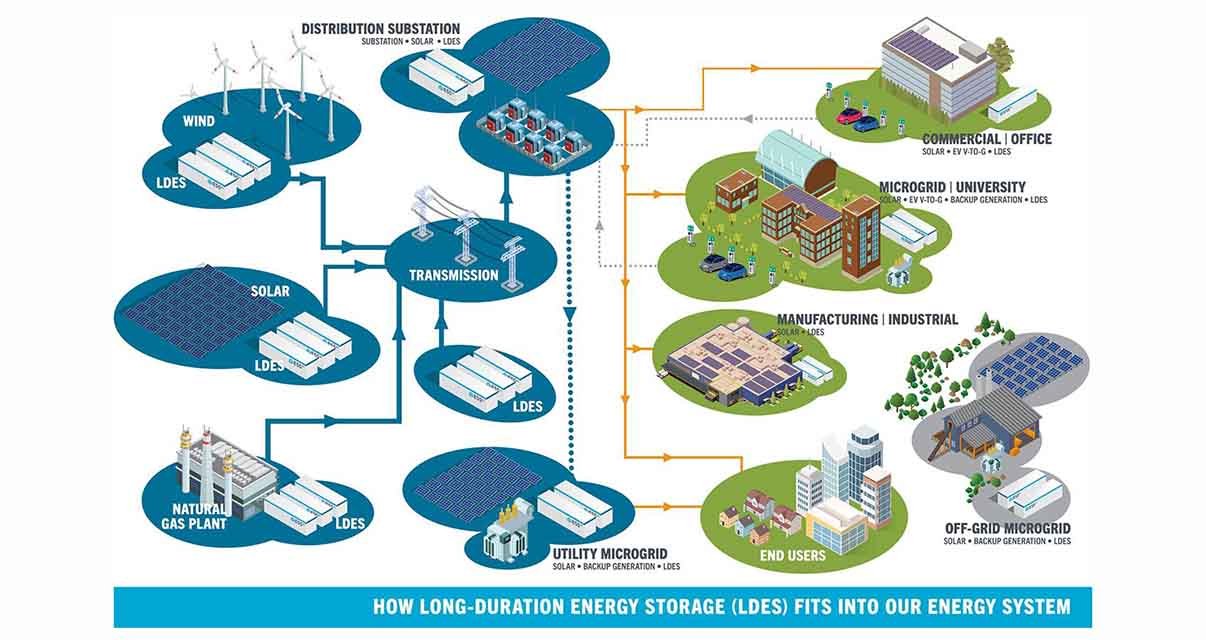
As Europe’s installed capacity for new energy sources continues to expand, addressing the intermittency issues associated with wind and solar power generation has become a critical challenge in driving the energy transition. Recently, Eurelectric, the European Power Industry Association, released a relevant analysis indicating that Long-duration Energy Storage (LDES) technology is emerging as an increasingly vital flexibility solution for Europe’s power systems and will play a pivotal role in the future in areas such as renewable energy integration, grid stability, and energy security.
This trend indicates that the energy storage industry is transitioning from traditional short-term regulation applications to a broader focus on long-term, large-scale energy management.
I. The rapid development of new energy sources is placing higher demands on energy storage systems.
In recent years, Europe has vigorously developed solar and wind power generation; however, renewable energy sources exhibit significant volatility.
for instance :
- During the day, photovoltaic power generation is high, but nighttime power supply cannot be sustained;
- Wind power generation is subject to weather conditions, resulting in uncertainty in power output;
- Seasonal changes lead to significant disparities between energy supply and demand.
As the share of renewable energy continues to rise, relying solely on traditional grid regulation methods will no longer be sufficient to meet future demands.
Energy storage systems can store excess electricity generated by renewable energy sources and release it when power demand increases or when renewable energy supply is insufficient, thereby enabling the temporal redistribution of energy.
Compared with traditional 2–4-hour energy storage systems, long-duration energy storage can provide continuous power support for 8 hours or even longer, making it more suitable for future power systems with a high proportion of renewable energy.
II. Why has long-duration energy storage become a key focus for Europe?
The European Power Industry Association believes that long-duration energy storage can help power systems address several key challenges:
1. Improve the utilization rate of new energy
During periods of abundant wind and solar resources, renewable energy generation may exceed the grid’s absorption capacity, leading to power curtailment.
Long-duration energy storage can store this low-cost green electricity and release it during peak demand periods, thereby improving the utilization efficiency of renewable energy.
2. Enhancing grid stability
As traditional fossil fuel-based power generation decreases, the power grid requires more flexible regulation resources.
Long-duration energy storage can provide continuous power support, alleviate grid pressure, and enhance energy supply security.
3. Reducing energy system costs
Relevant studies indicate that every additional 1 GW of long-duration energy storage capacity can generate annual operational cost savings of approximately €150–250 million for European power systems, while simultaneously reducing curtailment of renewable energy and grid congestion issues.
III. What are the key technological directions for long-duration energy storage in Europe in the future?
Currently, Europe is exploring various long-duration energy storage technologies, including:
Lithium-ion battery energy storage
As battery costs decline, high-capacity lithium-ion battery systems are continuously extending energy storage duration, making them the fastest-commercializing technical approach currently available.
Flow battery energy storage
Flow batteries feature a long cycle life and high safety, making them promising for large-scale fixed energy storage projects.
Hydrogen energy, thermal energy storage, and other technologies
To address energy storage needs across different days and seasons, technologies such as hydrogen-based energy storage and thermal energy storage are also garnering increasing attention.
In the future, different energy storage technologies will complement each other based on their respective application scenarios, collectively supporting Europe’s energy system transition.
IV. The European energy storage market presents new opportunities for energy storage enterprises
As Europe’s energy transition progresses further, the demand for energy storage will continue to grow.
For energy storage companies, opportunities in the European market primarily focus on:
- Home photovoltaic energy storage system;
- Industrial and commercial energy storage solutions;
- Grid-scale large-scale energy storage projects;
- Integrated application of new energy and energy storage.
However, when entering the European market, companies not only need to possess a price advantage but also need to pay close attention to the following:
- Product Safety Certification;
- Battery cycle life;
- Smart Energy Management System;
- Localized after-sales service capabilities.
In the future, companies capable of providing comprehensive energy storage solutions will possess greater market competitiveness.
V. moPower Empowers the Global Energy Transition
As a provider of new energy storage solutions, moPower consistently monitors global trends in energy storage technology and offers safe, efficient, and intelligent energy storage products for residential, commercial, and industrial users.
In the face of Europe’s rapidly evolving new energy landscape, energy storage will no longer be merely a backup energy solution, but will instead evolve into a critical energy infrastructure that connects renewable energy sources, the power grid, and end-users.
The advancement of long-duration energy storage technologies marks a transition of Europe’s energy system into a new era characterized by greater flexibility, higher efficiency, and enhanced sustainability, while also creating broader development opportunities for the global energy storage industry.