Sodium-ion batteries reach a critical turning point in industrialization: Is the energy storage market entering a “new oil era”?
As the global energy transition accelerates, battery technology is undergoing a new wave of transformation. A recent Morgan Stanley research report indicates that sodium-ion batteries are poised to usher in a “new oil era,” projecting their global market share to rise from approximately 2% in 2027 to 20% by 2030 and further to 37% by 2035, establishing them as a pivotal technological pathway in energy storage.
Why are sodium-ion batteries receiving so much attention?
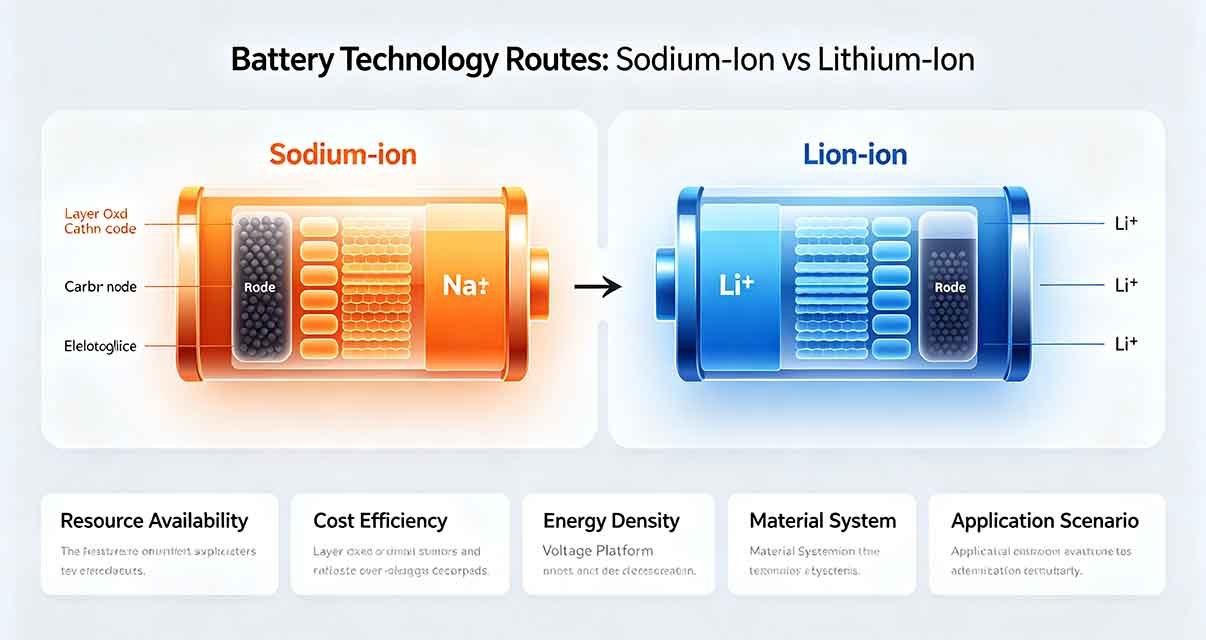
Compared to lithium-ion batteries, sodium-ion batteries offer the primary advantages of abundant resource availability and lower cost. Sodium is widely present in seawater and salt mines, ensuring a more stable supply chain and significantly reducing dependence on critical mineral resources such as lithium and cobalt. Additionally, sodium-ion batteries maintain excellent charge-discharge performance under low-temperature conditions and possess enhanced safety benefits, making them particularly suitable for applications in stationary energy storage, grid peak shaving, and industrial/commercial energy storage systems. Morgan Stanley believes that with the proliferation of AI-powered data centers, grid upgrades, and rapid growth in renewable energy installations, the demand for low-cost, large-scale energy storage will continue to rise, creating substantial development opportunities for sodium-ion batteries.
Will sodium batteries replace lithium batteries?
At present, the answer is no.
Although sodium-ion batteries offer cost advantages, their energy density remains lower than that of mainstream lithium iron phosphate (LFP) batteries; thus, for the foreseeable future, the two technologies are more likely to develop in a complementary manner.
- Lithium-ion batteries: Suitable for new energy vehicles, high-energy-density energy storage systems, and applications requiring long driving ranges.
- Sodium-ion batteries: More suitable for long-duration energy storage, grid energy storage, low-speed vehicles, and applications in cold regions.
The industry widely agrees that as manufacturing processes mature and large-scale production advances, sodium batteries will be the first to achieve commercial breakthroughs in the stationary energy storage market, while lithium batteries will remain dominant.
The energy storage industry is facing new development opportunities.
For the global energy storage industry, the rapid development of sodium-ion batteries signifies greater technological diversity. In the future, energy storage systems will select the most suitable battery solutions based on specific application requirements rather than relying on a single technology.
Especially in Europe, North America, and emerging markets, large-scale integration of renewable energy into the grid, enhanced grid flexibility, and the establishment of AI computing centers will continue to drive growth in energy storage demand. For system integrators and equipment suppliers, early adoption of sodium-ion battery technology and strengthening their product portfolios will enhance market competitiveness.
moPower continues to expand its portfolio of diversified energy storage solutions.
As a leading provider of professional lithium battery and energy storage system solutions, moPower consistently monitors global battery technology trends and offers customers residential energy storage systems, commercial/industrial energy storage solutions, lithium battery packs, and customized energy solutions.
Going forward, as sodium-ion batteries achieve widespread adoption, moPower will continue to monitor the commercialization of emerging technologies, delivering safer, more efficient, and cost-effective energy storage solutions to customers worldwide to support the global green energy transition.