
In-depth Analysis of Germany’s Energy Storage Market: Pricing Pressure and Capacity Market Challenges Amid Policy Uncertainty
As Europe’s energy transition accelerates, Germany—one of the key energy storage markets—is undergoing a pivotal shift from rapid growth to structural transformation. Recent industry analyses indicate that, amid uncertainties regarding grid costs, capacity mechanisms, and policy frameworks, the German energy storage market faces dual challenges: the need to restructure its profit models and increasing volatility in investment returns.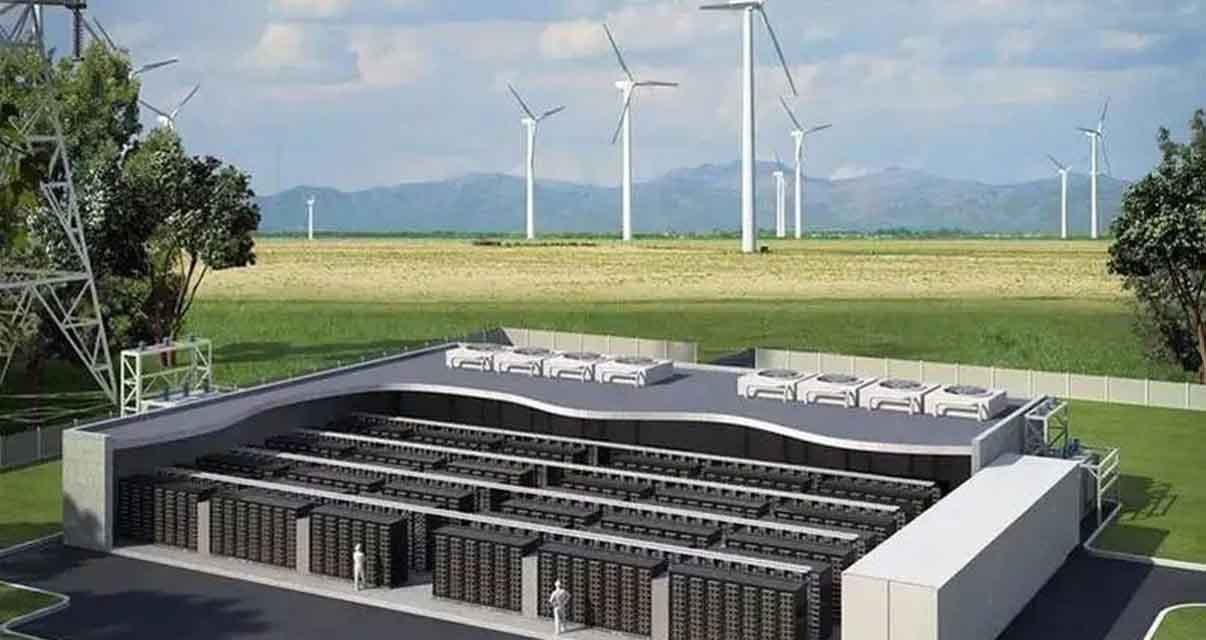
1. The German energy storage market has entered a period of structural adjustment.
Germany’s installed capacity for energy storage continues to grow, making it one of Europe’s most dynamic battery storage markets. However, the market structure is undergoing significant changes: large-scale storage (centralized systems) are rapidly emerging, while growth in household storage has slowed, and the overall market is shifting from decentralized deployment to large-scale centralized installations.
Against this backdrop, energy storage systems have evolved beyond being mere “supplementary energy sources” to become a core infrastructure essential for ensuring stable power system operation, effectively mitigating the volatility inherent in solar and wind power generation.
II. Policy uncertainty has become the core variable in the market
One of the biggest challenges facing Germany’s energy storage industry is the uncertainty surrounding policy and regulatory frameworks, which manifests itself in three key aspects:
1. The grid connection fees and regulations are unclear.
During grid integration, energy storage projects still face complex approval procedures and adjustments to grid fee structures, which undermine the stability of their revenue models.
2. The absence of a market mechanism for capacity allocation
Germany has not yet established a mature capacity market mechanism, resulting in energy storage revenues being highly dependent on the electricity spot market and ancillary services market, with significant revenue fluctuations.
3. Flexible Integration and Increased System Constraints
While certain flexible grid-connected protocols enhance connection speed, they simultaneously limit charging and discharging capabilities, thereby undermining long-term profitability.
III. Pricing Mechanism Under Pressure: Arbitrage Opportunities Continuously Narrow
Under the influence of a high proportion of renewable energy, Germany’s electricity market exhibits distinct characteristics of “increased price volatility and frequent negative pricing.” Energy storage systems should theoretically benefit from this situation, yet in reality:
- The intraday price spread is continuously narrowing.
- The growing number of energy storage participants has intensified competition.
- The proportion of revenue from ancillary services has declined
- Revenue is gradually shifting toward a “low-profit, high-turnover” model.
Meanwhile, energy storage systems paradoxically reduce their own arbitrage opportunities during the process of stabilizing electricity prices, demonstrating a classic case of market self-dilution.
IV. Challenges in the Capacity Market: Lack of a Benchmark for Long-Term Returns
The capacity market fundamentally aims to provide long-term revenue guarantees for flexible resources such as energy storage, yet Germany still lacks a unified regulatory framework, leading to the following issues:
- The investment recovery period is uncertain.
- Financing relies on short-term spot returns.
- The volatility in project valuation has intensified.
- The investor risk premium has risen.
The industry generally agrees that until a clear capacity market mechanism is established, Germany’s energy storage sector will continue to exhibit a dual characteristic of high volatility and high return expectations.
V. Implications for Energy Storage Companies
For energy storage system and solution providers like moPower, the German market remains strategically significant despite its complexity.
- Transition from “Equipment Export” to “System Capability Output”
Relying solely on hardware competition is no longer sufficient to ensure profitability; further improvements are needed:
- EMS Energy Management System
- Electricity Trading Strategy Capability
- Full lifecycle operation and maintenance services
- Enhance products with high safety and long cycle life
In the high-frequency charging and discharging market environment, higher demands are placed on battery lifespan and thermal management.
- Focus on hybrid scenarios involving industrial and commercial applications alongside large-scale storage systems
Compared to household storage, large-scale and industrial/commercial energy storage systems offer greater economies of scale.
VI. Conclusion: The Critical Turning Point from “Policy-Driven” to “Market-Driven” Development
Germany’s energy storage market is transitioning from an early policy-driven phase to a mature, competitive stage centered on electricity market mechanisms. Throughout this process, increasingly complex pricing mechanisms, the absence of a capacity market, and restructuring of revenue structures will continue to shape industry investment dynamics.
For global energy storage companies, those who can establish a stable revenue model amid uncertainties stand a strong chance of securing a pivotal position in Europe’s next round of energy structure reform.