
2026 Lithium Battery Technology Landscape: Who Will Prevail Among LFP, Ternary, Semi-Solid-State and All-Solid-State Batteries?
Competition in lithium battery technology is essentially about adopting different strategies to resolve the triangular contradiction between energy density, safety and cost. At present, four mainstream routes have emerged in the market: lithium iron phosphate, ternary lithium, semi-solid-state and all-solid-state batteries, each with advantages in different application scenarios.
Lithium iron phosphate (LFP) is the cornerstone of safety and cost control. Its core advantages lie in exceptional thermal stability and an ultra-long cycle life of more than 3,000 cycles. Besides, it contains no precious metals such as cobalt and nickel, giving it a significant cost edge.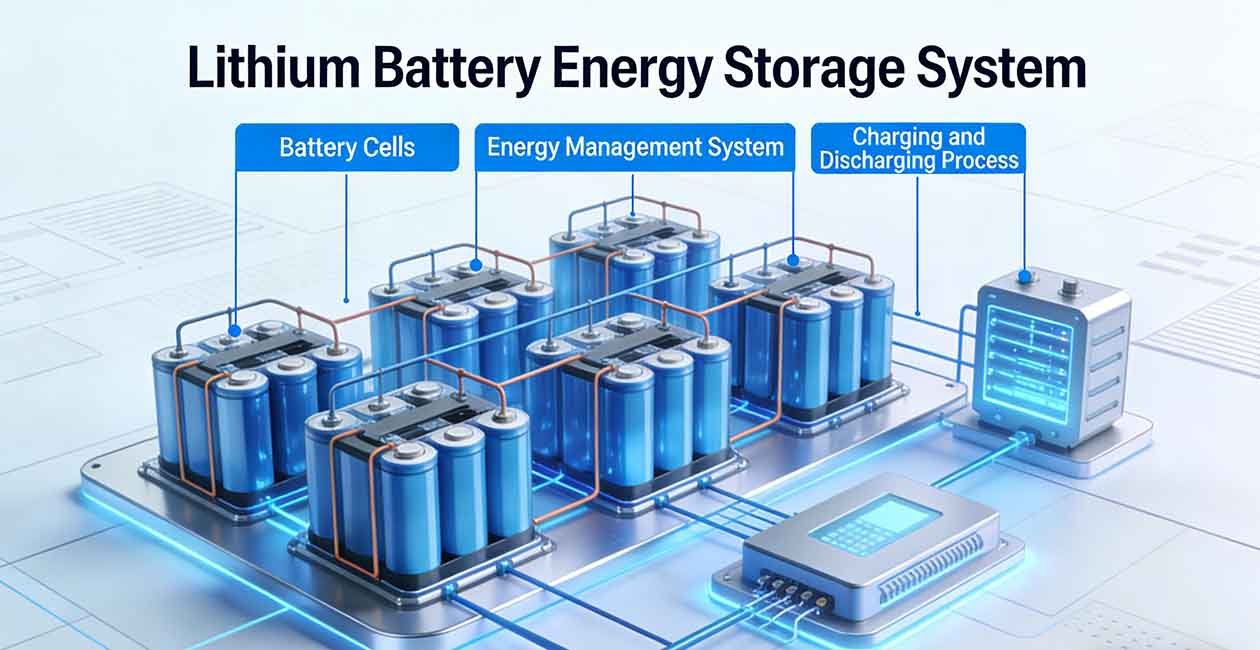
Ternary lithium batteries are the leader in range and performance. Using nickel-cobalt-manganese/lithium nickel cobalt aluminum oxide as the cathode, they can achieve an energy density of 250–300+ Wh/kg with excellent low-temperature performance, making them the preferred choice for high-end long-range vehicles. To address the poor cycle stability of high-nickel materials, the research group led by Professor Liu Quanbing from Guangdong University of Technology applied a hydrophobic protective layer of dihexadecyl phosphate on the surface of NCM811 via a wet impregnation method, which improved both environmental stability and lithium-ion transport efficiency.
As a transitional technology, semi-solid-state batteries are similar to hybrid electric vehicles. By introducing solid electrolytes on the basis of liquid batteries, they achieve a dual improvement in safety and energy density. With an energy density of 350–500 Wh/kg, they make a driving range of over 1,000 kilometers possible. In addition, the gelation of the electrolyte greatly reduces the risk of spontaneous combustion.
All-solid-state batteries represent the summit of future technology, launching a brand-new architecture just like pure electric vehicles. Adopting all-solid electrolytes and completely eliminating liquid components, they boast a theoretical energy density of over 500 Wh/kg and absolute safety as they are non-flammable and non-explosive. However, they face technical challenges such as solid-solid interface contact failure and impedance layer formation, and are currently in the late stage of research and development or small-scale pilot production.